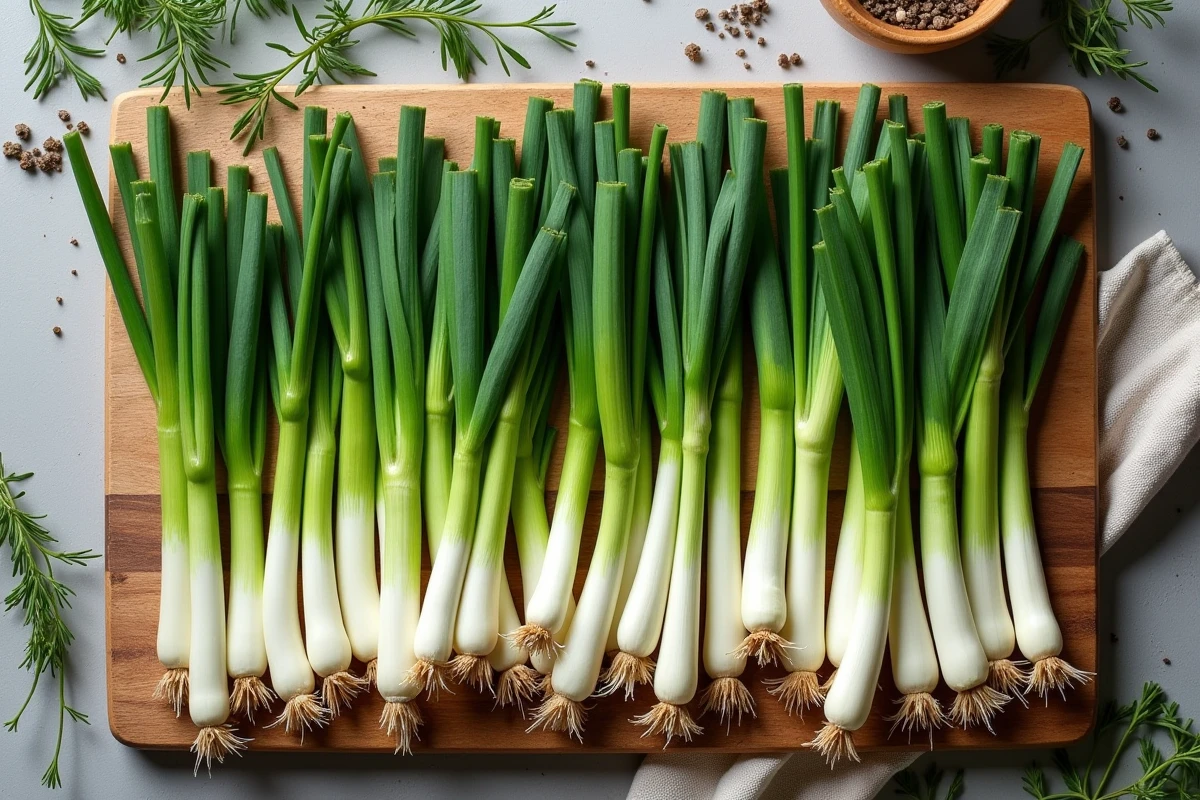
The scallion presents a recurring problem in professional kitchens: its aromatic profile, halfway between onion and chives, combines a sweet note in the bulb and a herbaceous freshness in the stem. Replacing the scallion in your recipes requires separating these two components to redistribute them across one or more suitable substitutes based on the type of cooking.
Organoleptic profile of the scallion and substitution criteria
The scallion belongs to the allium family, like onion, shallot, or chives. Its uniqueness lies in a balance between sweetness and spiciness that few alliums can reproduce on their own.
The bulb, often white or slightly pink, releases a sweet flavor when cooked. The green stem, consumed raw, adds a fresh and slightly peppery note. We recommend treating these two parts as distinct ingredients when choosing a replacement.
Three criteria guide substitution: the desired aromatic intensity, the behavior under heat (melting or crunchy), and the visual role in the dish. A Vietnamese pho garnish does not call for the same substitute as a quiche where the scallion melts into the mixture. To explore in detail what to replace scallions in your dishes, these criteria form the foundation of any decision.

Substitutes for the green part: chives, green onion tops, and young garlic leaves
The green stem of the scallion primarily serves as a raw garnish. This function should be prioritized in Asian recipes, composed salads, or omelets.
Fresh chives
Chives are the most direct substitute for the green stem. Their thinner diameter requires more generous chopping to achieve an equivalent volume. Chives lose all structure when cooked, which limits them to garnishes and cold preparations.
Green onion tops and young garlic leaves
Green onion tops (spring onions) offer a meatier texture than chives and can withstand a quick stir-fry. Young garlic, with its flat and tender leaves, provides a more pronounced allium note, interesting in stir-fries or marinades.
- Chives: raw garnish, salads, served soups, fresh cheese. Generous dosing to compensate for the fineness of the strands.
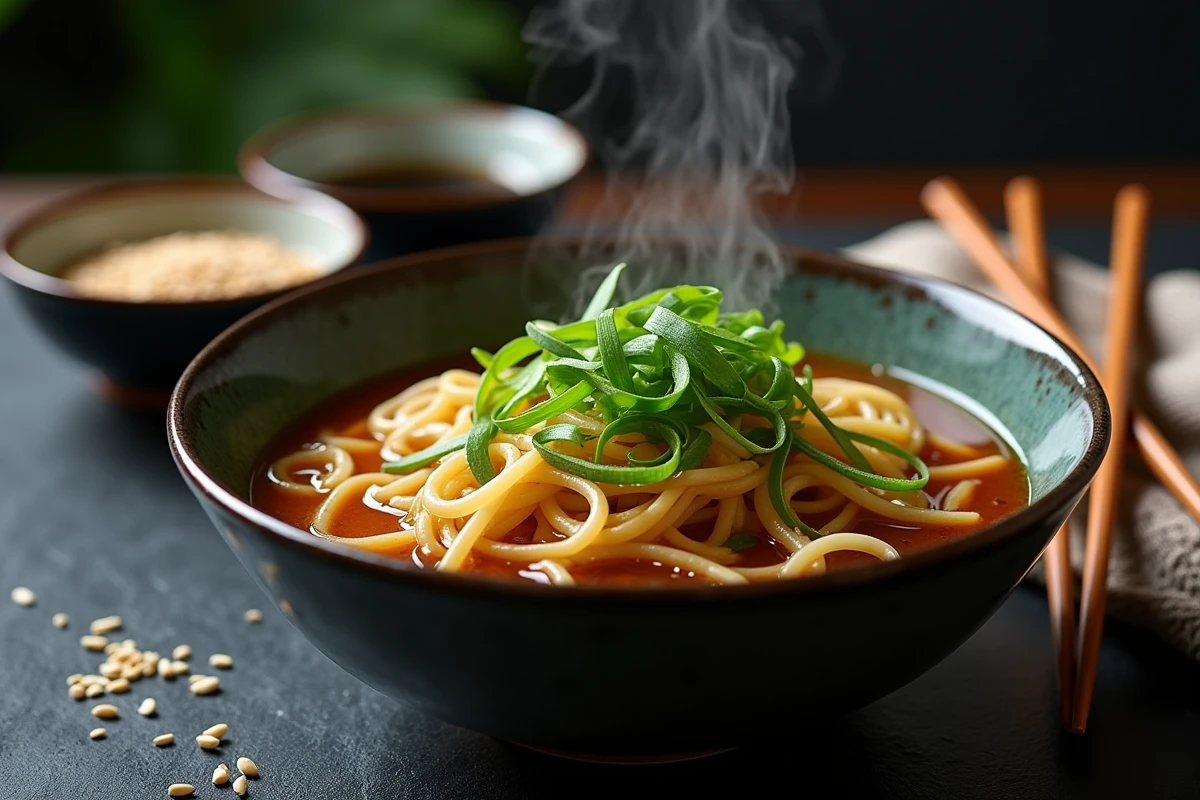
- Green onion tops: quick stir-fries, ramen or pho garnishes, omelets. Cut into two-centimeter pieces to maintain crunchiness.
- Young garlic leaves: marinades, sautéed vegetables, green pestos. The flavor is more pronounced, reduce the amount by a third compared to scallions.
Substitutes for the bulb: shallot, new white onion, and leek
The bulb of the scallion melts quickly and releases a subtle sweetness. This characteristic should be replicated in cooked dishes.
Gray or traditional shallot
The shallot is the best substitute for sauces and long cooking. Its flavor, more complex and slightly wine-like, integrates naturally into dressings, tart bases, and sautéed dishes. However, it lacks the herbaceous freshness: we recommend pairing it with chopped chives at the end of cooking to regain the dual dimension of the scallion.
New white onion
The new white onion, harvested before full maturity, has a tender and juicy bulb. Its taste remains sharper than that of the scallion. To soften this intensity, a quick soak of the slices in ice water reduces the sulfur’s aggressiveness. This substitute works well in dishes where the scallion is thinly sliced raw, such as Thai salads.
Leek (white part)
The white part of the leek, finely chopped, replicates the melting texture of the scallion bulb when cooked. The flavor is earthier and less sweet. Reducing the cut thickness to a maximum of two millimeters speeds up cooking time and prevents a stringy texture.
Adapting the substitute according to the type of recipe
We observe that most articles provide a list of substitutes without distinguishing the culinary context. This approach leads to disappointing results, as an effective raw substitute may perform poorly when cooked.
- Raw recipes (salads, garnishes, tartares): chives or green onion tops, chopped just before serving to preserve color and crunch.
- Short cooking (wok, stir-fries, omelets): pieces of green onion tops or young garlic leaves, added at the end of cooking to maintain a slight bite.
- Long cooking (soups, stews, quiches): minced shallot for the aromatic base, complemented by chives at plating.
- Pickles and condiments: thinly sliced new white onion, marinated in a mixture of rice vinegar and sugar. The result is similar to marinated scallions served in Korean cuisine.
FODMAP sensitivity and non-allium alternatives
People following a low-FODMAP diet have difficulty tolerating scallions, whose bulb contains fructans. Most classic substitutes (shallot, onion, leek) pose the same problem as they belong to the same botanical family.
The green part of chives and green onion tops remains low in FODMAP and constitutes a viable option for these profiles. It provides the visual and aromatic dimension without triggering digestive discomfort.
Outside of alliums, finely sliced fennel offers a sweet anise note that works well in salads. Asafoetida, an Indian powdered spice, reproduces a pronounced allium flavor without containing fructans. A pinch is enough to flavor a stew.
The choice of the right substitute is based on a simple logic: identify whether the recipe uses the bulb, the stem, or both, and then pair the ingredients accordingly. A shallot alone will never completely replace a scallion, but a shallot melted during cooking, enhanced with fresh chives at serving, comes quite close.