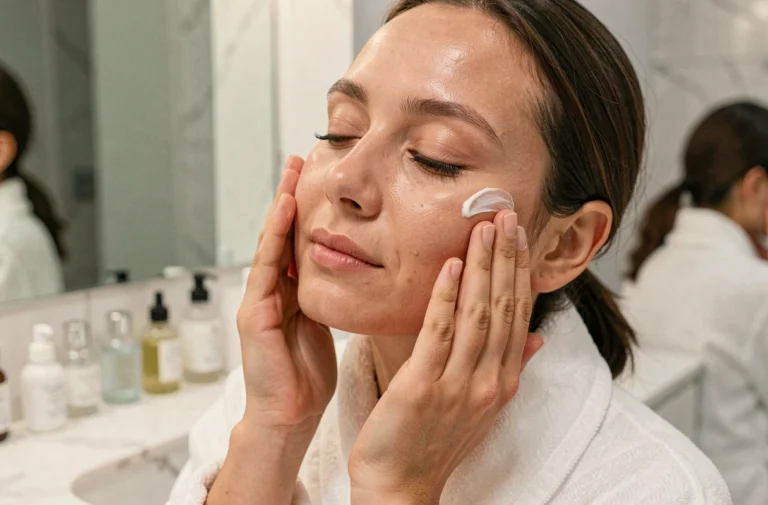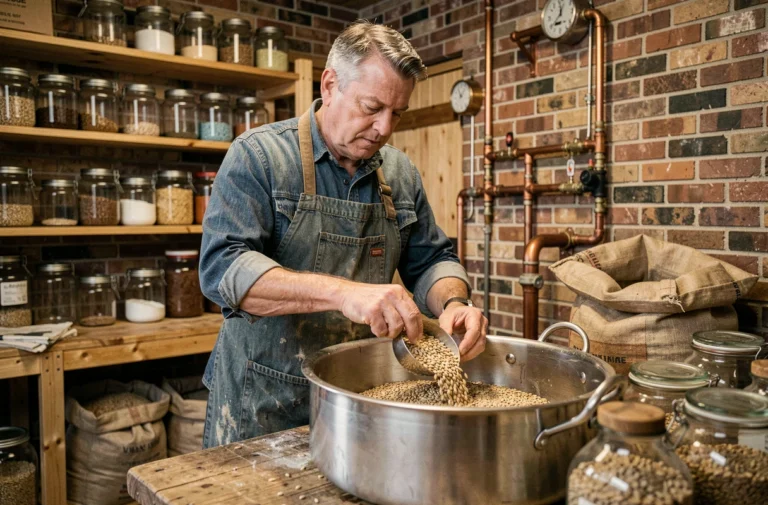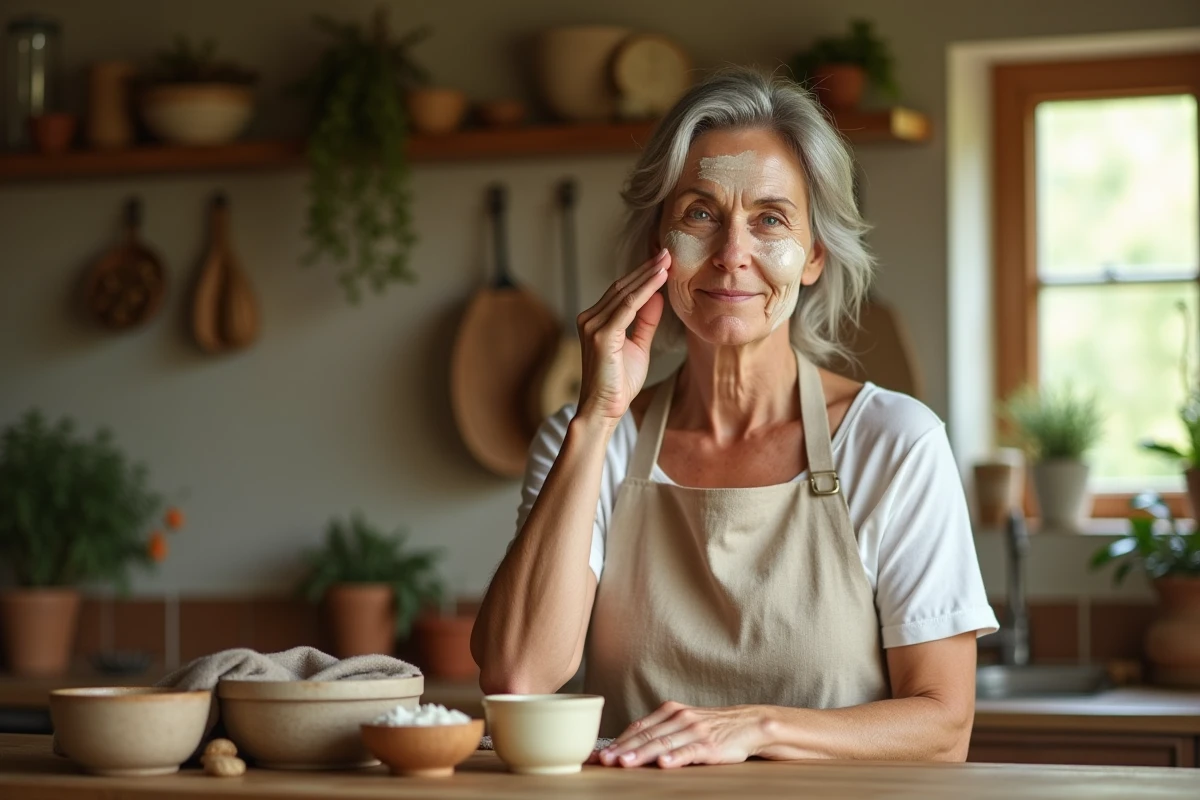
Skin laxity results from a gradual loss of collagen and elastin in the dermis. Grandmother’s remedies for firming the skin rely on natural active ingredients (proteins, fruit acids, caffeine) that temporarily stimulate firmness or microcirculation. Their effectiveness depends as much on the choice of ingredient as on how it is applied, and some common mistakes can negate their effects or even damage the skin.
Contraindications of natural firming remedies according to skin type
Before trying a homemade treatment, the first question to ask concerns skin tolerance. Each natural ingredient has limitations that vary according to the condition of the skin.
The egg white, often recommended for its tightening effect, poses a problem for dry mature skin. Feedback from beauticians on professional forums (Aesthé Clinic, late 2024) reports increased dryness after application. The albumin, when drying, pulls on the epidermis and dehydrates already fragile skin. Immediate hydration after removing the mask becomes essential, which diminishes the interest of the treatment.
Citrus fruits (lemon, orange) contain photosensitizing acids. Since March 2025, European regulation (EU) 2025/456 has strengthened restrictions on citrus essential oils in daytime care, requiring warning labels to prevent pigmentation risks. Applying lemon juice to the face before sun exposure can cause lasting brown spots.
Choosing a grandmother’s remedy to firm the skin without checking these contraindications is an unnecessary risk. Caution involves testing each preparation on a small area of the arm before applying it to the face or décolletage.
- Dry or mature skin: avoid egg white alone, prefer a mixture with honey to limit dehydration
- Reactive or sensitive skin: exclude pure citrus and undiluted essential oils
- Acne-prone skin: limit comedogenic vegetable oils (coconut) in favor of lighter rosehip oil
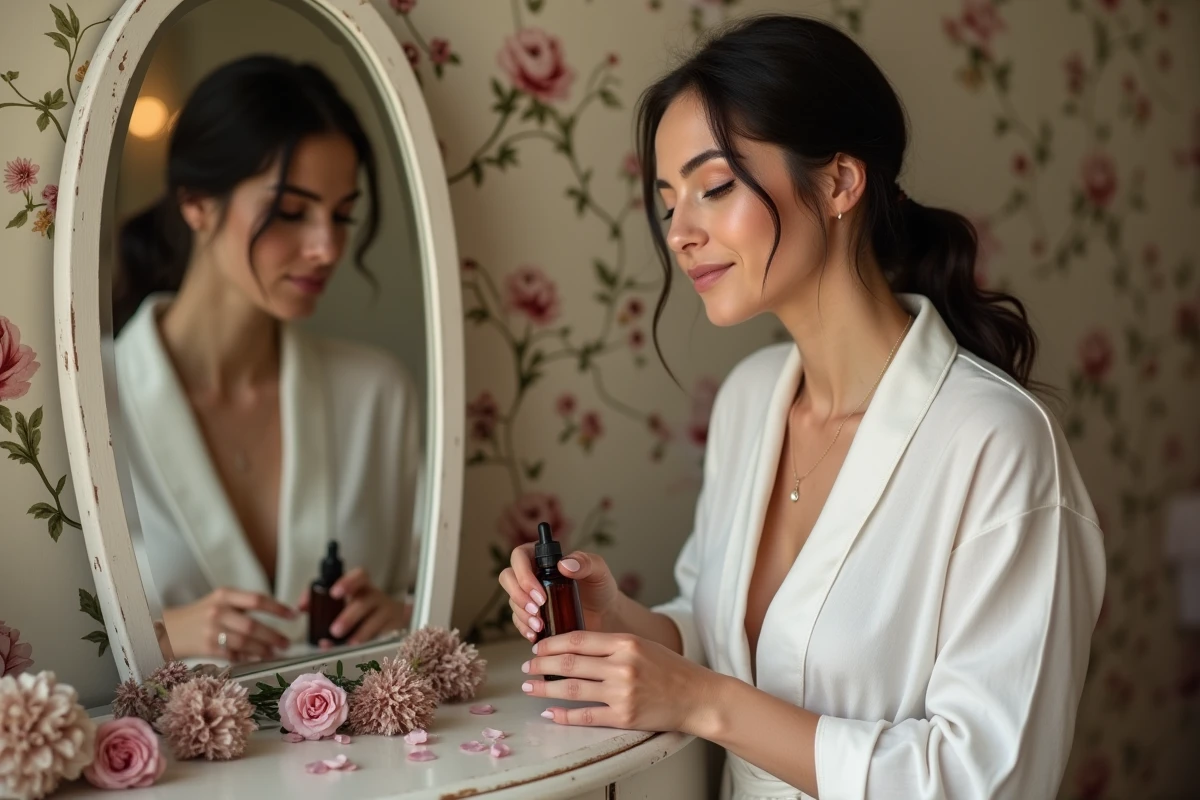
Coffee grounds and caffeine: an underestimated active ingredient for firming arms and thighs
The majority of competing articles focus on facial masks. However, body areas such as arms, thighs, and abdomen respond to different mechanisms.
Coffee grounds wraps have been gaining popularity since 2025 in wellness routines. The caffeine released during the massage stimulates local microcirculation and promotes drainage. On the arms and thighs, this mechanical action combined with the vasoconstrictive effect of caffeine produces a more pronounced temporary firming than on the face.
The technique is as important as the ingredient. A coffee grounds scrub applied without pressure, in circular motions, for several minutes allows the caffeine to penetrate. Rinsing too quickly or scrubbing harshly irritates the skin without improving absorption.
Common mistake with coffee grounds
Using grounds that are still hot, directly out of the coffee maker, causes burns on thin skin (inside of arms, décolletage). The grounds must be cooled and mixed with a vegetable oil (olive, sweet almond) to form a homogeneous paste. This fatty substance serves as a carrier and protects the epidermis from excessive abrasion from the grains.
Centella asiatica and rosehip oil: active ingredients to combine
Among the natural ingredients documented for their properties on skin firmness, centella asiatica stands out for its action on collagen synthesis. Used for centuries in traditional Asian medicine, this plant is now integrated into many professional cosmetic formulations.
For home use, centella gel or extract is applied in conjunction with a massage. The combination with rosehip oil, rich in polyunsaturated fatty acids, enhances dermal hydration while supporting cellular regeneration.
Why aloe vera alone is not enough
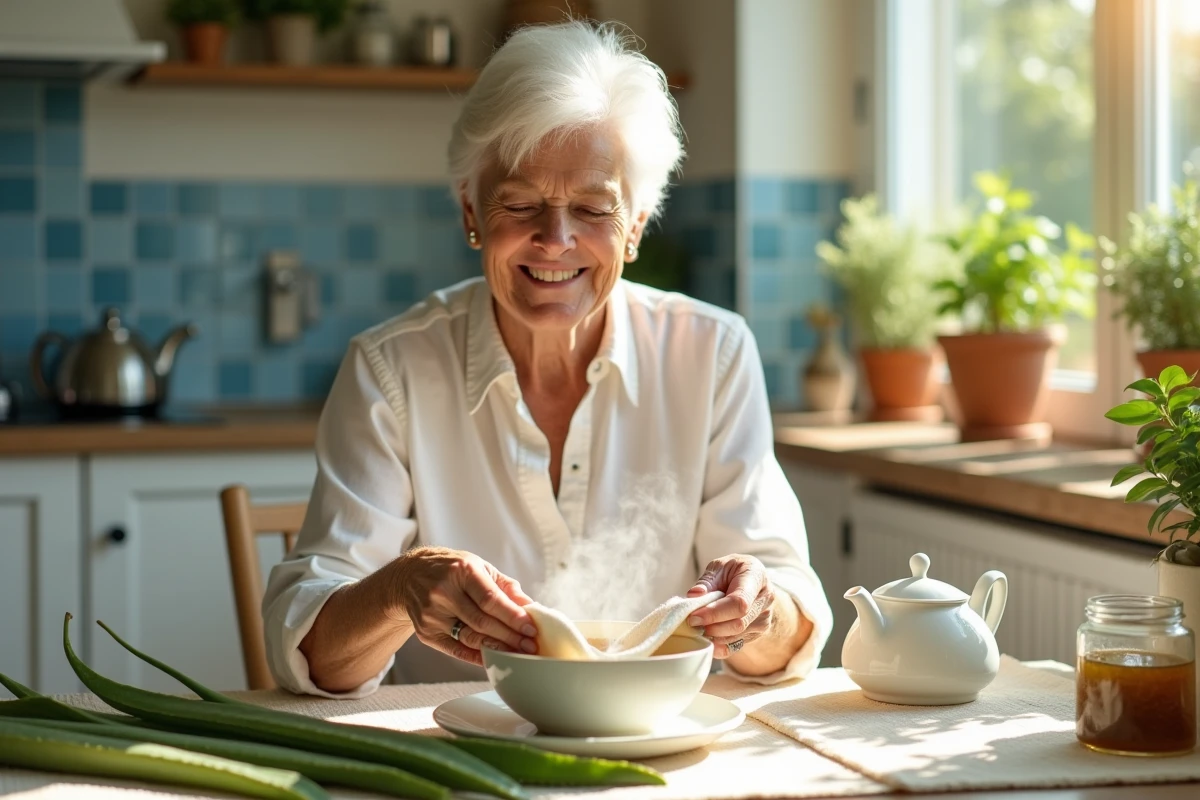
Aloe vera hydrates and soothes, but its firming effect remains limited without a complementary active ingredient. Aloe vera gel mainly acts on the superficial layer of the epidermis. To achieve a visible result on firmness, it benefits from being mixed with honey (a natural humectant) and a few drops of rosehip oil.
This combination works on both the face and body. Apply the mixture in a thick layer, leave it on for about fifteen minutes, then rinse with lukewarm water. Cold water for the final rinse tightens pores and amplifies the tightening effect.
Frequency and duration of application: mistakes that negate effects
A firming mask applied once a month produces no measurable results. Conversely, aggressive daily use (repeated scrubs, concentrated fruit acids) weakens the skin barrier and accelerates laxity.
Two to three applications per week constitute the optimal rhythm for most homemade treatments. This rhythm allows the skin time to regenerate between each application while maintaining regular stimulation.
- Egg white or clay masks: maximum two times a week, always followed by a moisturizing cream
- Coffee grounds scrubs: once or twice a week on the body, avoid the face if the skin is thin
- Homemade serums (aloe vera, centella, rosehip oil): daily application possible as these actives do not irritate the epidermis
Application time also plays a role. Allowing a clay mask to dry completely until it cracks dehydrates the skin instead of toning it. Remove the mask as soon as it starts to tighten to preserve natural hydration while benefiting from the remineralizing effect.
Consistency over several weeks matters more than the intensity of a single session. Collagen fibers do not regenerate in one mask, and homemade remedies work through the gradual accumulation of small benefits, not through radical transformation.