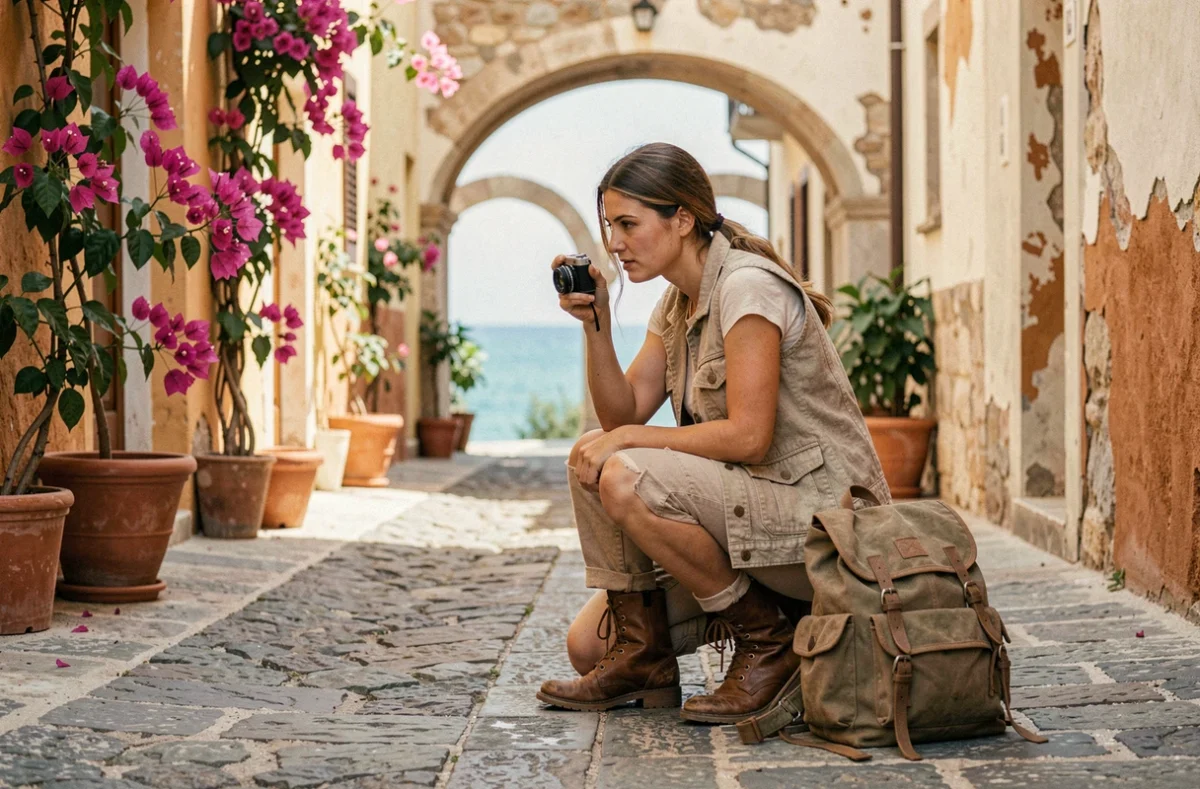
In a local market in Rajasthan, the light falls differently depending on whether you are in the shade of an awning or in full sunlight. This mundane constraint is known to any traveler who pulls out a camera. Yet, it conditions the quality of the image as much as the choice of destination. Traveling through photos is not about collecting snapshots of monuments: it’s about learning to read a place through light, framing, and the time you are willing to spend there.
Travel Drone Regulations in Europe: What Changed in 2026
We start with the topic that concerns more and more traveler-photographers: drones. Since December 31, 2025, drones without Class C marking no longer benefit from the transitional regime in the European Union. In practical terms, a drone purchased a few years ago and lacking this certification can no longer fly under the same conditions as before.
The EASA published a new opinion on September 18, 2026, proposing to lower the mandatory registration threshold from 250 g to 100 g. Most compact travel drones weigh around this threshold. If this proposal is adopted, even the lightest models will require registration and remote identification.
To organize a photo trip that includes aerial shots, there are galleries and field reports on https://www.voyager-en-images.fr/ that illustrate well the possibilities and constraints depending on the destinations.
In Scandinavia, the framework is even more restrictive than one might think. No-fly zones are numerous, and administrative procedures vary greatly from one country to another. Taking a drone to Norway or Finland without checking local regulations risks confiscation at customs or a fine on-site.
- Check the Class C marking of your drone before any departure to Europe (the “legacy” models no longer qualify)
- Consult the authorized flight zones for each country crossed, not just the destination country
- Anticipate registration and remote identification, even for a drone under 250 g if the EASA proposal is adopted
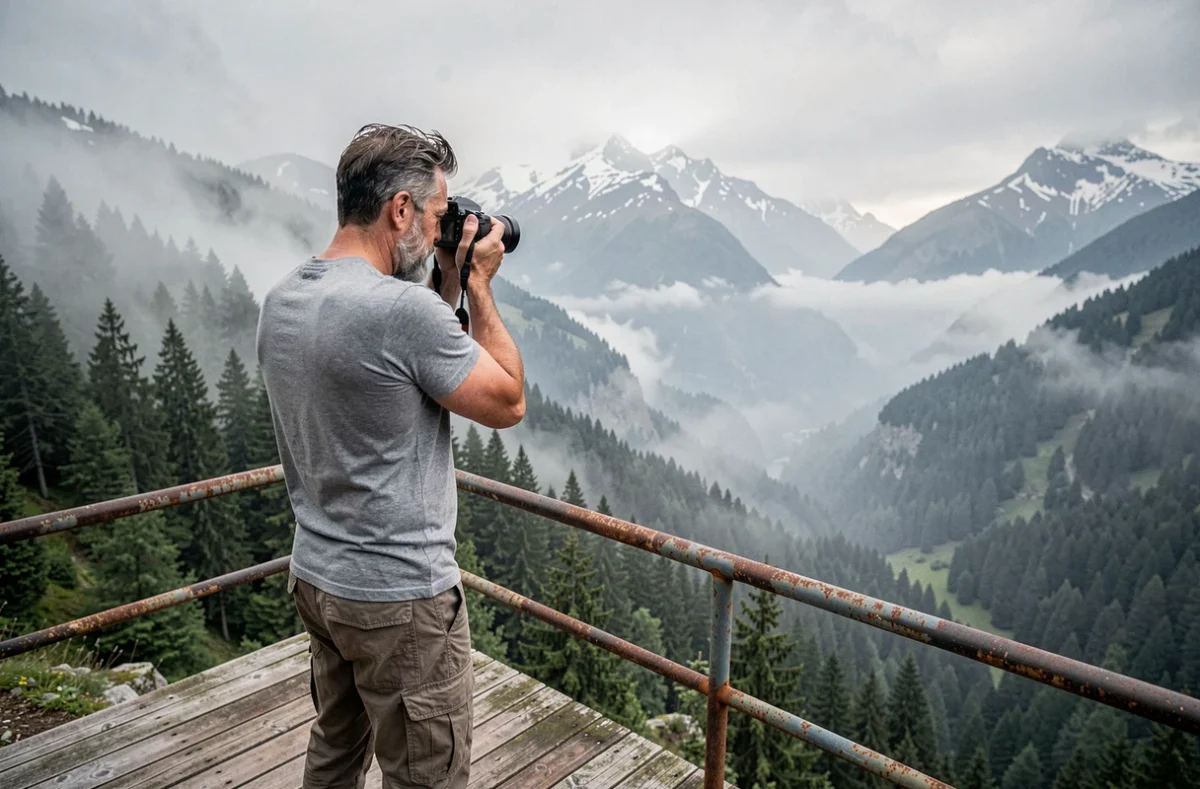
Travel Photography and Slow Travel: Why Staying Longer Changes the Images
The trend of slow travel – longer stays in the same place – directly modifies photographic practice. This is not an abstract concept: when you stay a week in a village instead of two days, you end up photographing the Tuesday market under three different lights.
A prolonged stay allows you to spot recurring scenes and wait for the right conditions. The passing photographer captures what he sees. The one who stays captures what he understands.
This approach aligns with sustainable travel practices highlighted in recent content on the subject: energy sobriety, lower-emission transport, local immersion. Fewer moves between destinations also means less time lost in transit and more time with the camera in hand.
Adapting Your Gear to Slow Travel
Staying somewhere for a long time also changes the equipment logic. You can afford a heavier tripod, an additional lens. Feedback varies on this point: some travelers prefer to keep a minimal kit even on a fixed stay, to remain mobile on foot.
The most effective approach is to choose two complementary focal lengths rather than a versatile zoom. A wide-angle for landscapes and architecture, a medium focal length for portraits and street scenes. You gain in image quality what you lose in versatility.
Right to Image in Travel: Concrete Pitfalls to Avoid
Photographing people abroad raises legal questions that many travelers are unaware of. The framework of the right to image varies radically from country to country, and ignorance does not protect.
Photographing without consent in a private space visible from a drone is illegal in most European countries. GDPR rules apply as soon as a person is identifiable in an image captured by a drone, even outdoors. This point is often overlooked by amateur photographers.
Good Field Practices for Street Photography
In classic street photography (without a drone), the rules are more flexible in many countries, but not everywhere. Here are some concrete reflexes:
- Ask for permission before photographing a vendor at their stall, even if local law does not always require it – this is the best way to get a natural portrait
- Avoid publishing photos of recognizable children without explicit parental consent, regardless of the country
- Keep a copy of local regulations on your phone to show in case of discussion with authorities
- In conflict or sensitive areas, never photograph military installations or border posts
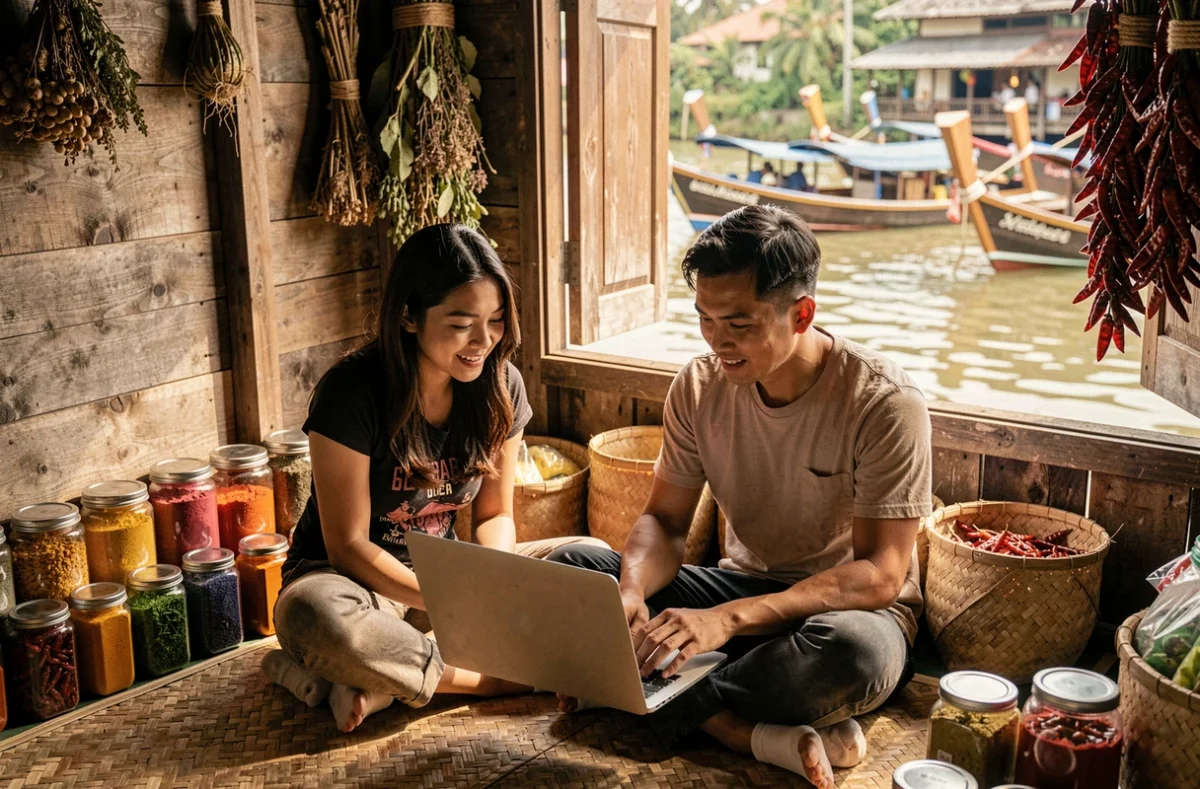
Photo Itineraries and Less Saturated Destinations
Classic travel guides point to the same viewpoints. You find the same frames of Santorini or Bali on thousands of accounts. To bring back different images, you need to step outside the marked routes.
The destinations that offer the best photographic potential are not necessarily the most spectacular. A fishing village in Portugal, a covered market in Georgia, or a secondary road in Scotland produce more unique images than a saturated Instagram spot.
Favoring off-peak hours and intermediate seasons also radically transforms the results. The same square photographed in November at 7 a.m. is nothing like the summer version at noon. You gain in atmosphere, depth of light, and avoid crowds in the frame.
The choice of destination matters less than how you approach it. A few days in a medium-sized city, with an itinerary built around light and local scenes, produces a more coherent photographic corpus than a three-week tour through five countries. The time constraint, paradoxically, forces you to look better.