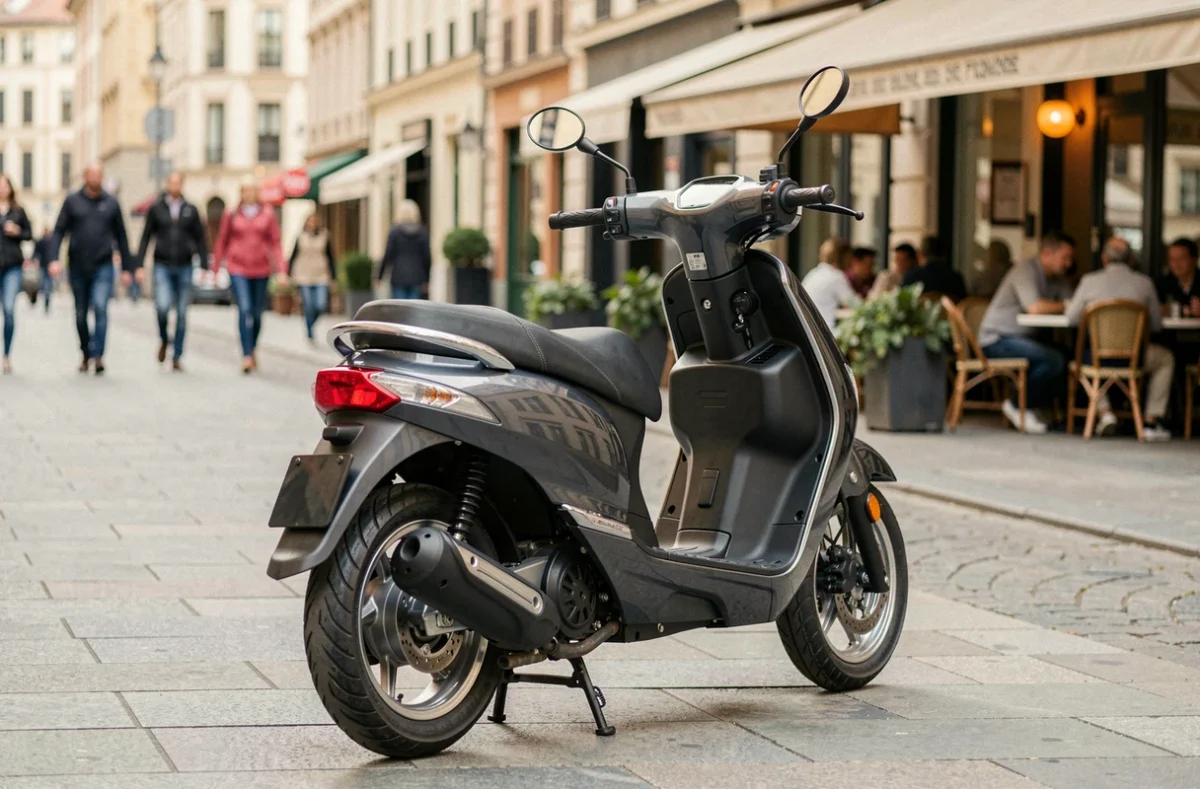
Riding a scooter without a motorcycle licence is becoming increasingly popular with urban commuters. The promise is appealing: an accessible motorised two-wheeler that you can ride with a simple AM licence—or even without any driving licence if you were born before 1988. But when you’re looking for the most powerful licence-free scooter, regulations set a strict limit that manufacturers’ spec sheets don’t always make clear.
Maximum power for a licence-free scooter: what the law actually allows
A so-called “licence-free” scooter belongs to the moped category. In France, this category has two simultaneous limits: a top speed of 45 km/h and a maximum power output of 4 kW. Whether the engine is petrol or electric, these two thresholds define the legal framework.
Have you noticed that an electric scooter sometimes lists a peak power output well above 4 kW? This figure does not refer to continuous rated power, which is what determines the vehicle’s regulatory category. Two models with similar specifications on paper may fall under different regulations depending on their type approval.
Before buying, check the vehicle category listed on the certificate of conformity. A model approved as L1e (two-wheeled moped) or L2e (three-wheeled moped) can still be ridden with an AM licence. Above that, you move into a category requiring an A1 or B licence with training.
Among the powerful licence-free 3-wheel scooters, some models use the L2e category to offer greater stability while remaining within the legal framework for mopeds.
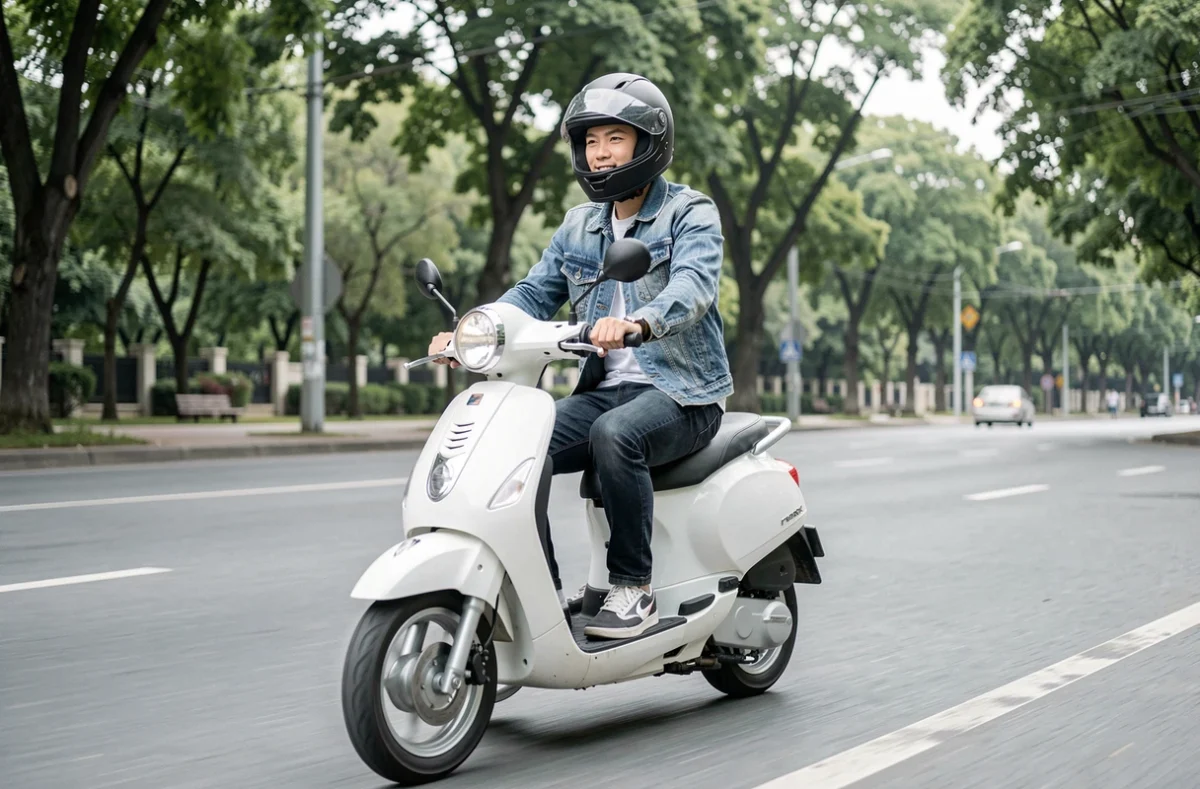
Licence-free electric or petrol scooter: where the real difference in power lies
On a conventional 50 cc petrol moped, the engine delivers power progressively. Acceleration is modest, and top speed is around the legal limit of 45 km/h.
An electric scooter in the equivalent category offers a different riding experience. An electric motor’s instant torque delivers sharper acceleration from a standstill, even though top speed remains the same. In the city, this responsiveness makes a real difference in traffic.
The confusion often comes from product specifications. A manufacturer may list a peak power output of 6 or 8 kW for a model that is still type-approved as a moped, because its continuous rated power does not exceed 4 kW. It’s worth understanding this technical distinction before comparing models.
What matters beyond the power rating
Comparing two licence-free scooters based solely on their advertised power is not enough. Several factors directly affect the riding experience:
- Vehicle weight: a lighter scooter makes better use of its permitted 4 kW, especially on hills or when pulling away from traffic lights
- Transmission type: a belt-and-variator transmission (common on petrol models) or direct drive (common on electric models) affects how power reaches the wheel
- Real-world range in urban conditions: a high-performance electric motor loses its advantage on daily journeys if it is held back by a low-capacity battery
- Brake and suspension quality, which determine safety at 45 km/h on uneven roads
A lightweight scooter with good low-end torque will be more enjoyable to ride than a heavier model with the same rated power.
Roadworthiness testing and insurance: two often-overlooked requirements
Since 15 April 2024, mopeds and scooters in category L have been subject to roadworthiness testing. The schedule depends on the vehicle’s date of first registration. Models registered in 2020 or 2021 are among the first affected by this requirement.
This has changed the second-hand market. A used licence-free scooter without a valid roadworthiness test can no longer be sold legally under the same conditions as before. This protects buyers, but also means you need to budget for the test.
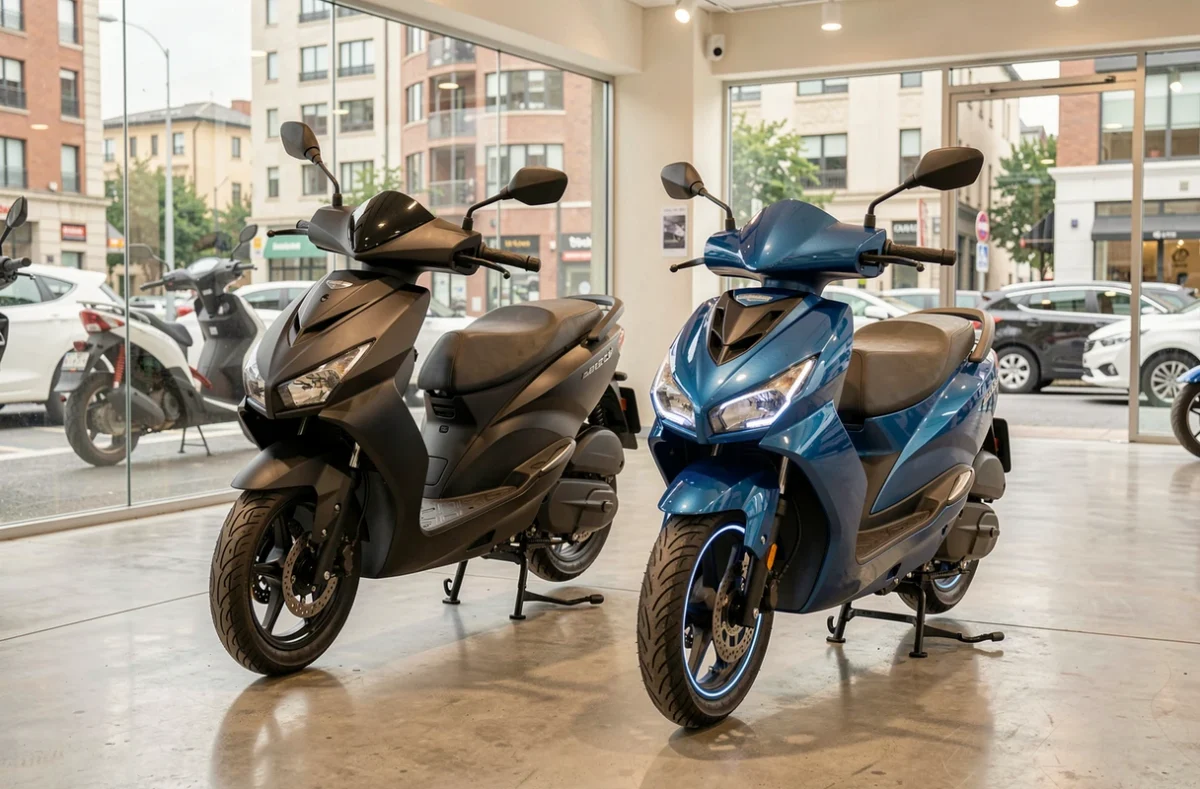
As for insurance, a moped must have at least third-party liability cover. The cost varies depending on the model, location and rider’s profile. Electric scooters sometimes qualify for slightly lower premiums, as some insurers consider them to pose less mechanical risk.
Choosing a licence-free scooter: questions to ask before you buy
Why choose this type of scooter over another? The answer depends on how you’ll actually use it. A short commute to work in the city centre calls for a different model than suburban riding that includes stretches of regional road.
- For city-only use, choose a compact, lightweight model that’s easy to park and manoeuvre in traffic
- For a mix of city and suburban journeys, a scooter with a wider seat and larger-diameter wheels will be more comfortable on the road
- If you ride in all weather, check whether it has a compatible leg cover and good-quality lighting—two often-overlooked safety features
The licence you need depends on your year of birth. Anyone born in 1988 or later must hold an AM licence or another valid driving licence. Riders born before that date can ride a moped without an AM licence, but insurance is mandatory in all cases.
The purchase price of a licence-free scooter varies considerably between entry-level petrol models and better-equipped electric versions. Rather than chasing the highest power rating on paper, focus on how well the scooter suits your daily route, its weight and the manufacturer’s reliability. A scooter that’s properly matched to your needs will make the most of the regulated 4 kW, without any unpleasant surprises during type approval or roadworthiness testing.