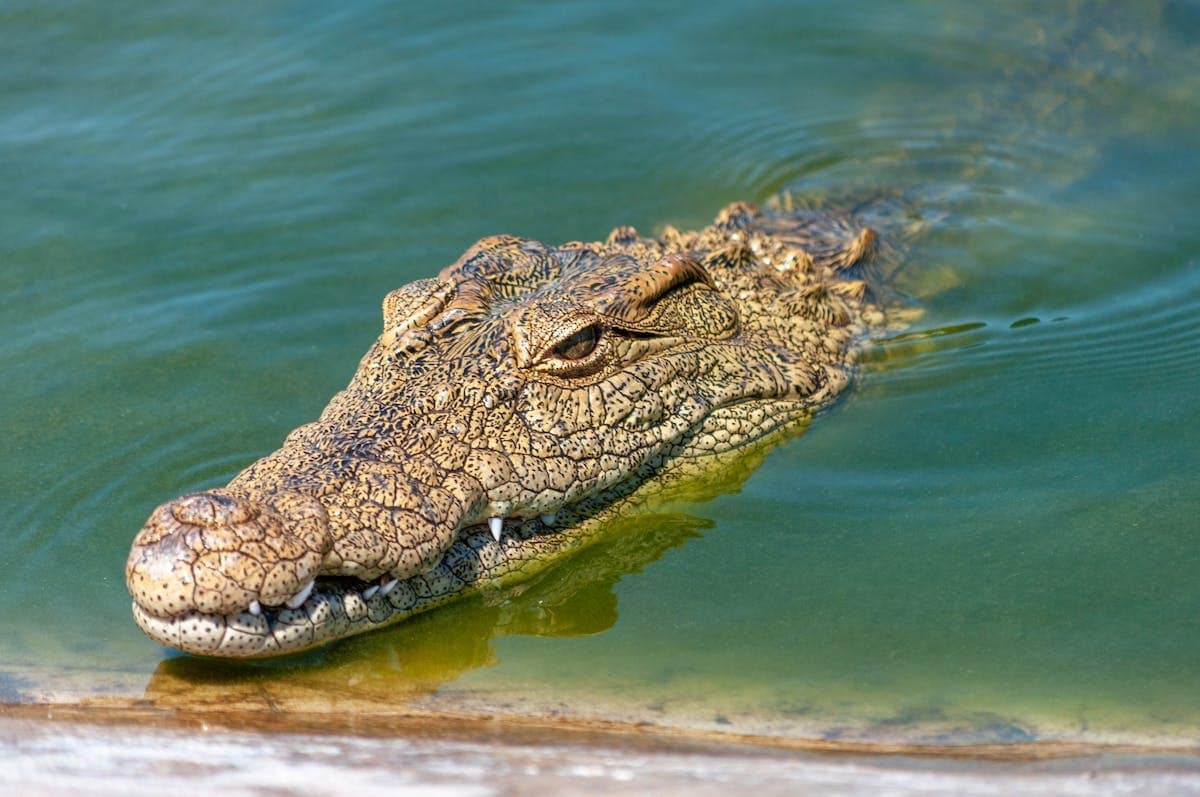
Imposing and feared, the crocodile reigns supreme over the waters. Its majesty is not only due to its brute strength or its impenetrable scale armor, but also to its surprising aquatic agility. Indeed, it is not uncommon to see it darting at prodigious speeds in the water, leaving a tumultuous wake behind. Yet, despite its notoriety, the capabilities of this astonishing predator remain largely unknown and underestimated. It is therefore time to lift the veil on the king of aquatic speed and dive into the depths of its secret life.
The crocodile: an extraordinary predator in the water
The incredible adaptation of the crocodile to its aquatic environment is a true marvel of nature. Equipped with a body specially designed for water, the crocodile is a formidable predator both on land and at sea.
Its streamlined silhouette and powerful muscles allow it to move with agility in the strongest currents. But it is especially its tail that makes all the difference. Long and muscular, it serves as a true propulsion when swimming. Thanks to it, it can reach impressive speeds.
The maximum speed of a crocodile varies by species, but it is generally estimated to be around 20 km/h in the water. This may seem modest compared to other marine animals such as dolphins or sharks, but do not be fooled: the crocodile has developed a unique hunting technique that allows it to compensate for this relative slowness.
Indeed, the crocodile does not need to be as fast as its prey to capture its meal. Instead, it uses the strategy of ambush: motionless and camouflaged underwater or near the banks, it patiently waits for its prey to come close enough to deliver a fatal blow with its incredible jaw strength.
But speed is not the only remarkable skill possessed by the crocodile. Its keen eyesight allows it to easily identify its prey even in low-light conditions. Its senses are also extremely developed: its sharp sense of smell enables it to detect the slightest trace of a potential prey, while its acute hearing allows it to locate movements in the water.
Unfortunately, despite all these qualities and skills, crocodiles face numerous threats that jeopardize their survival. The destruction of their natural habitat, poaching for their precious skin, and illegal trafficking are all dangers that threaten their existence.
Measures must be taken to protect these impressive reptiles. Initiatives aimed at creating natural reserves and raising public awareness about the importance of preserving these unique species are crucial to ensure a harmonious coexistence between crocodiles and us humans.
The crocodile remains a fascinating animal whose speed in the water is just one aspect among many others. Its remarkable adaptability to its aquatic environment makes it a true king of the waters, deserving all our respect and protection.
The physical assets of the formidable hunting crocodile
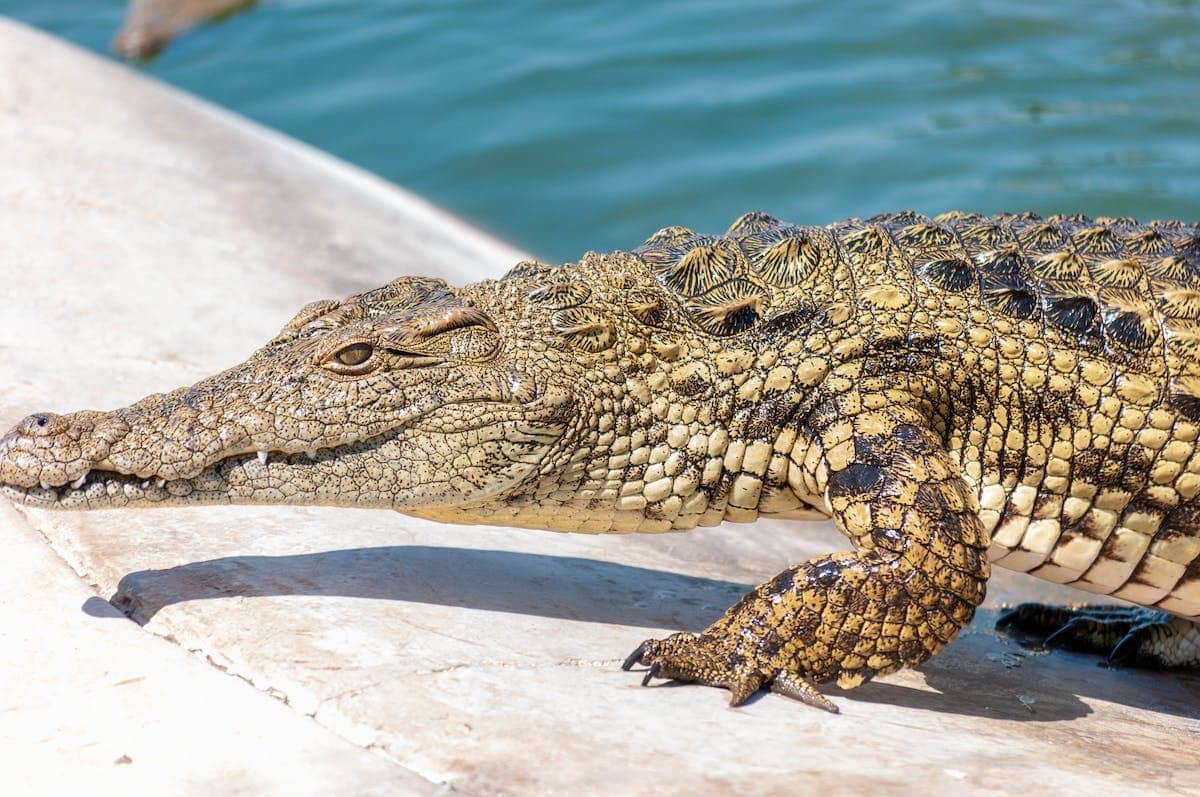
The crocodile also possesses a formidable defense system, making it a feared predator by many species. Its thick and rough scales provide protection against potential attacks, while its powerful jaw is equipped with sharp teeth designed to grasp and tear apart its prey.
But what makes the crocodile even more impressive is its ability to regulate its body temperature through its unique thermoregulatory behavior. Indeed, these reptiles are poikilothermic, meaning they depend on their environment to maintain their body heat. To warm up, they enjoy basking in the sun on the banks of rivers or in rocky areas.
The physiology of the crocodile allows it to stay underwater for long periods without needing to surface for air. The nostrils located on the top of their head can be sealed tightly when they dive, allowing them to avoid any water entry during their prolonged aquatic expeditions.
In concluding this section dedicated to the physical characteristics of the crocodile as a formidable predator in the water, it is important to mention its incredible ability to survive in harsh conditions. These animals have extraordinary resilience and can survive for several months without food if necessary.
Although some may view the crocodile as a frightening and dangerous creature, it is essential to recognize its crucial role in aquatic ecosystems. As a predator, it maintains the balance of animal populations by controlling prey species.
The crocodile is undoubtedly the king of speed in the water thanks to its unique physical characteristics adapted to its aquatic environment. Its powerful tail allows it to reach impressive speeds, while its keen eyesight and developed senses make it a formidable hunter.
Despite all its remarkable skills, the crocodile faces threats that endanger its survival. The conservation of its natural habitat and public awareness are crucial to ensure the preservation of this fascinating creature and guarantee a harmonious coexistence between humans and crocodiles.
The surprising hunting method of the crocodile
The hunting technique of the crocodile is truly fascinating and deserves special attention. This predator uses a subtle and strategic approach to capture its prey in the water.
The crocodile skillfully camouflages itself by hiding just beneath the water’s surface, with only its eyes and snout emerging above. This position allows it to remain invisible to animals coming to drink or bathe near the banks.
Patient and motionless, it carefully observes the movements of potential victims. When an opportunity arises, the crocodile unleashes all its power to act quickly.
With its muscular and powerful tail, it performs a rapid lateral movement that propels its body out of the water with remarkable precision. This lightning-fast attack often catches prey off guard, leaving them little time to react.
Once in contact with its target, the crocodile firmly clamps its jaw around it. Its sharp teeth penetrate deeply into the flesh while it uses its considerable strength to immobilize its prey.
Underwater, the crocodile can also be formidable thanks to its exceptional respiratory capabilities. Indeed, when it captures a larger or more resistant prey than expected, it can quickly dive while holding it beneath the surface until it is sufficiently weakened to be eaten.
This unique hunting technique makes the crocodile a formidable predator, capable of adapting to different types of aquatic environments. Whether in rivers, swamps, or lakes, the crocodile is an undisputed master of underwater hunting.
It is important to emphasize that the crocodile does not hunt solely to meet its dietary needs. In reality, it plays a crucial role in maintaining the ecological balance of the aquatic ecosystems it inhabits.
As a dominant predator, the crocodile naturally regulates animal populations within its environment. This contributes to a healthy structure and dynamics of biological communities that closely depend on interactions between different species.
We must recognize and respect this key position of the crocodile in aquatic ecosystems to ensure their sustainability and optimal functioning.
The reign of the crocodile remains unyielding in the face of the challenges that lie ahead. The protection and conservation of natural habitats are essential to guarantee its future survival as well as that of other species with which it shares these precious wetlands.
Incredible: the speed of the crocodile in aquatic environments
In the animal world, few aquatic predators can match the impressive speed of the crocodile in the water. Its elongated silhouette and streamlined body provide it with perfect hydrodynamics to move gracefully and quickly.
The secret to this speed lies in its powerful tail, which acts as a propulsive engine. Through precise wave-like movements, the crocodile can achieve incredible speeds in just moments.
It should be noted that speed is not only utilized during attacks; the crocodile is also a fast swimmer when moving from one point to another in its territory. This efficiency allows it to cover large distances in search of prey or to explore its environment.
Despite its remarkable speed in the water, the crocodile is not invincible. Certainly, it can be outpaced by other marine species such as dolphins or orcas in their respective domains. No other reptile rivals the crocodile in terms of aquatic speed.
The undisputed king of rivers and swamps has everything to impress: brute strength combined with remarkable agility makes the crocodile a formidable and dominant predator that rules over its aquatic kingdom. Its majestic appearance evokes admiration and fear in those fortunate enough to witness its prowess.
Every time you observe a crocodile gliding silently through the water or suddenly leaping towards its prey with astonishing speed, remember that it is the true king of tumultuous waters and perfectly embodies the grace combined with brute strength.
No one can contest its supremacy in these aquatic habitats where it has proudly reigned for millions of years.
The multiple talents of the crocodile revealed
Beyond its impressive speed, the crocodile possesses other remarkable skills that make it a true exceptional aquatic predator. Among these skills are its incredible ability to camouflage and its formidable jaw strength.
Camouflage is an essential weapon for the crocodile’s survival. Its scaly skin, composed of bony plates called scutes, allows it to blend perfectly into its aquatic environment. The dark and light hues present on its skin give it an impeccable appearance that makes it almost invisible to potential prey. This camouflaged adaptation greatly facilitates its surprise attacks.
The jaw strength of the crocodile is legendary. Its powerful jaws contain nearly 60 sharp teeth ready to shred any unwary prey that ventures too close to its territory. The pressure exerted when it closes its jaws is simply phenomenal, reaching up to 3,700 psi (pounds per square inch). This enormous force allows the crocodile not only to securely grasp its prey but also to hold it captive with no chance of escape.
Another remarkable aspect of the crocodile is its ability to intelligently regulate its body temperature through a unique system known as behavioral ectothermic thermoregulation. By using this ingenious method, the reptile can adjust its body temperature according to its environment. It thus exposes its body to the sun or takes refuge in the water to maintain an optimal temperature.
The crocodile possesses an excellent spatial memory. This skill allows it to memorize the precise details of its territory, including water points, hiding spots, and even migratory routes. Thanks to this remarkable ability, it can easily find specific places in complex areas and navigate effortlessly from one point to another.
Thus, the crocodile is much more than just a fast predator in the water. Its varied skills make it a true evolutionary masterpiece adapted to aquatic life. Its ability to camouflage, unparalleled jaw strength, effective thermoregulation, and exceptional spatial memory make the crocodile the absolute master of its aquatic domain.
In the following article, we will explore in depth the complex relationship between the crocodile and its fragile ecosystem, where it plays a crucial role as a regulator predator of local animal populations. Stay tuned to discover how this king of tumultuous waters significantly influences the biodiversity that surrounds it.