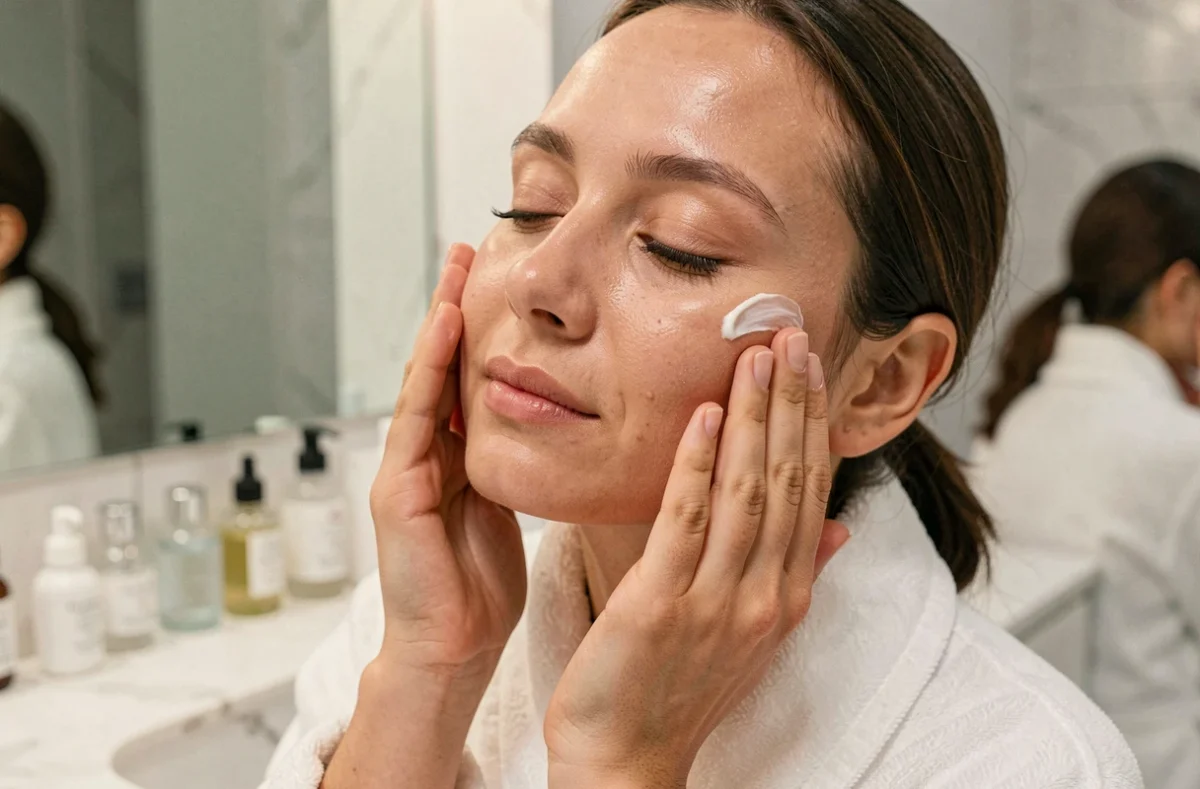
The pH of the cleanser conditions everything that follows in a facial routine. A product that is too alkaline (pH above 6.5) disrupts the barrier function within a few days of regular use, and no serum will correct this imbalance downstream. We recommend starting from this data before choosing any active ingredient.
pH of facial cleanser and skin barrier function
The stratum corneum functions properly within a pH range of 4.5 to 5.5. A cleanser formulated outside of this range weakens the acid mantle, which promotes transepidermal water loss and makes the skin more permeable to irritants.
Testing the pH of a cleanser requires only a pH strip. If the value exceeds 6, the product may be suitable for the body, but not for the face. We observe that the majority of traditional solid soaps have a pH between 9 and 10, which explains the tight feeling after use.
For those who find beauty tips on Le Blog de Lalie, this pH-centered approach aligns with a care logic based on physiology rather than marketing.
A cleanser with the right pH reduces the need to multiply corrective treatments. Fewer products mean less risk of cross-reaction between actives.
European regulation on microplastics in cosmetics
The European regulation gradually restricts the intentional addition of synthetic polymer particles in cosmetic products. Microbead exfoliants are the first targets, but the scope extends to leave-on treatments and certain makeup products, with deadlines spread over several years.
In practice, this modifies the composition of many mechanical scrubs available in retail. Granular alternatives (apricot kernel powder, salicylic acid in chemical exfoliation) are becoming the norm due to regulatory obligation, not just ethical choice.
Fragrance allergens: what the European regulation changes
Many fragrance allergens must now be declared individually on the labeling when they exceed certain concentration thresholds. The new requirements particularly concern products placed on the market in the coming years.
For reactive skin, this increased transparency allows for cross-referencing the INCI list with known intolerances. This does not mean that all fragrances are irritating, but the information available for making an informed choice increases significantly.
Minimalist routine and layering actives: balancing efficacy and tolerance
The current dermatological trend is towards reducing the number of products applied. Layering a vitamin C serum, an AHA exfoliant, a retinoid, and a niacinamide treatment in the same week often causes more sensitization than visible benefit.
Three well-chosen products cover the majority of skin needs: a suitable cleanser, a targeted active, and sun protection in the morning. We recommend adding a fourth product only if a dermatological diagnosis justifies it.
- In the morning: gentle cleanser (pH 4.5-5.5), topical antioxidant (vitamin C or ferulic acid), sunscreen SPF suitable for skin phototype
- In the evening: double cleansing if makeup or water-resistant sunscreen, then a single treatment active (retinoid or exfoliating acid, never both the same evening)
- Weekly: a hydrating mask or a moderate concentration chemical exfoliant, depending on individual tolerance

Active ingredient interactions to avoid in the same application
Vitamin C (L-ascorbic acid) and niacinamide were long presented as incompatible. Current data nuance this point, but combining a retinoid and an AHA in the same evening routine is still discouraged due to the cumulative risk of irritation and excessive peeling.
Hyaluronic acid, on the other hand, combines without conflict with almost all actives. Its role is mechanical (water retention in the superficial layers), not chemical.
Skin type and acne: adapting treatments to diagnosis, not trends
Anti-blemish routines copied from social media ignore a determining variable: the type of acne. Inflammatory acne (red spots, papules) does not respond to the same actives as retention acne (blackheads, microcysts).
- Retention acne: chemical exfoliants based on salicylic acid (BHA) penetrate sebum and unclog pores. Local application, moderate concentration
- Inflammatory acne: benzoyl peroxide or topical retinoids target bacterial proliferation and cell turnover. Niacinamide complements by reducing sebum production
- Mixed acne: alternate the two approaches depending on the areas of the face. The forehead and nose (T-zone) often fall under retention, while the cheeks are inflammatory
Treating acne without knowing its type is like choosing medication without a diagnosis. A dermatological consultation remains the first step before investing in powerful actives.
Sun protection and acne scars
Post-inflammatory marks (brown or red spots left by blemishes) worsen with UV exposure. Daily sunscreen accelerates their fading much more than a depigmenting serum used without sun protection.
Mineral filters (zinc oxide, titanium dioxide) are suitable for skin sensitized by anti-acne treatments. Chemical filters, more cosmetic, remain a viable option for non-irritated skin.

The most productive approach remains to build your routine by subtraction rather than accumulation. Identifying the correct cleanser, targeting a single treatment active at a time, and protecting from the sun every morning already covers the essentials. Everything else is a matter of seasonal adjustment or medical diagnosis.