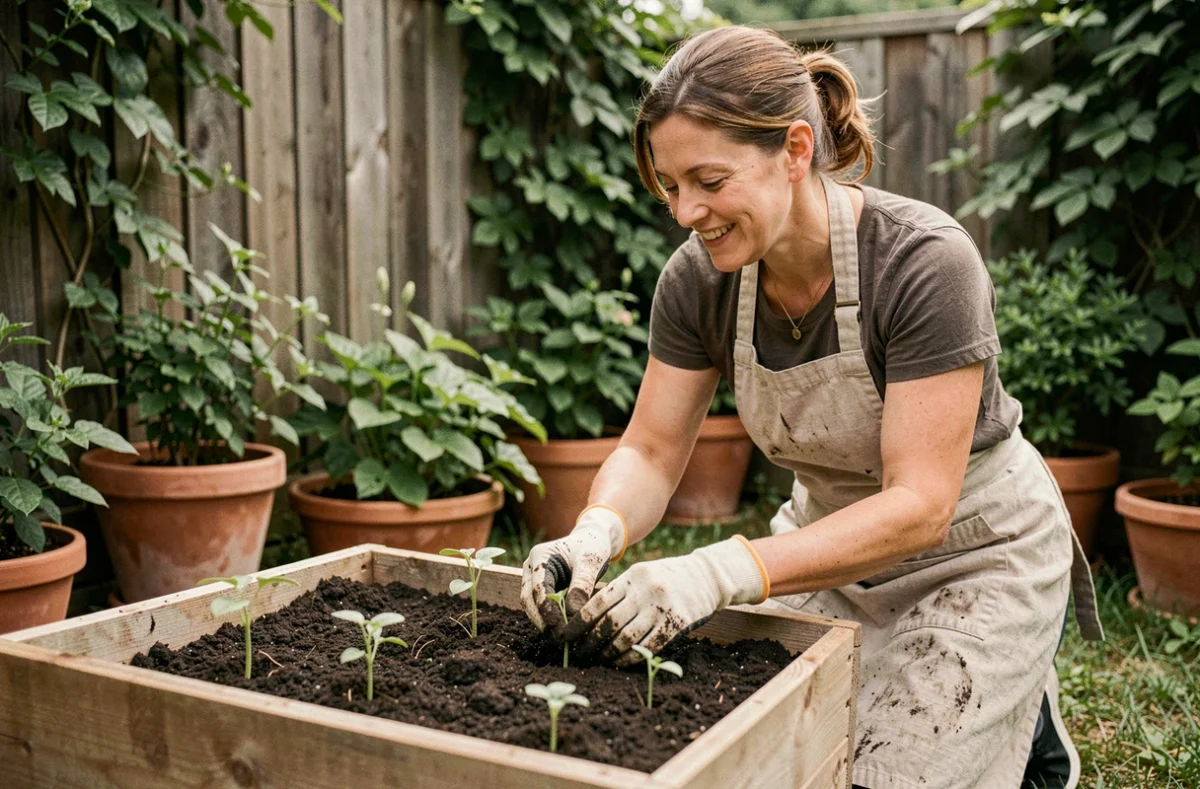
What concrete levers distinguish a garden that is simply “green” from a truly eco-responsible garden? The answer lies in technical choices regarding soil, water, and biodiversity, whose impact varies according to the practices adopted. Terre d’Humus offers resources that cover these areas, but not all approaches are equal in terms of effectiveness on the fertility and resilience of the garden.
Soil Cover and Water Management: Two Practices to Compare
Eco-responsible gardens are based on a common foundation, but results differ depending on the chosen method. The table below contrasts two strategies that are often confused: permanent mulching and surface composting.
| Criterion | Permanent Mulching | Surface Composting |
|---|---|---|
| Effect on Water Retention | Limits evaporation, reduces runoff | Improves soil structure in the long term |
| Direct Nutritional Contribution | Low (carbon material) | High (nitrogen and carbon material) |
| Protection Against Erosion | Immediate upon application | Progressive, after decomposition |
| Required Work | Seasonal renewal | Regular small contributions |
| Impact on Soil Life | Promotes decomposer fungi | Stimulates bacteria and earthworms |
The two approaches are not mutually exclusive. Organic mulching (dead leaves, shredded material) eventually decomposes and nourishes the soil, while surface composting partially protects against drying out. However, their immediate effects differ, and choosing one over the other depends on the initial condition of the soil.
The practical sheets available on www.terredhumus.fr detail these two methods with indications suitable for clay, sandy, or loamy soils.
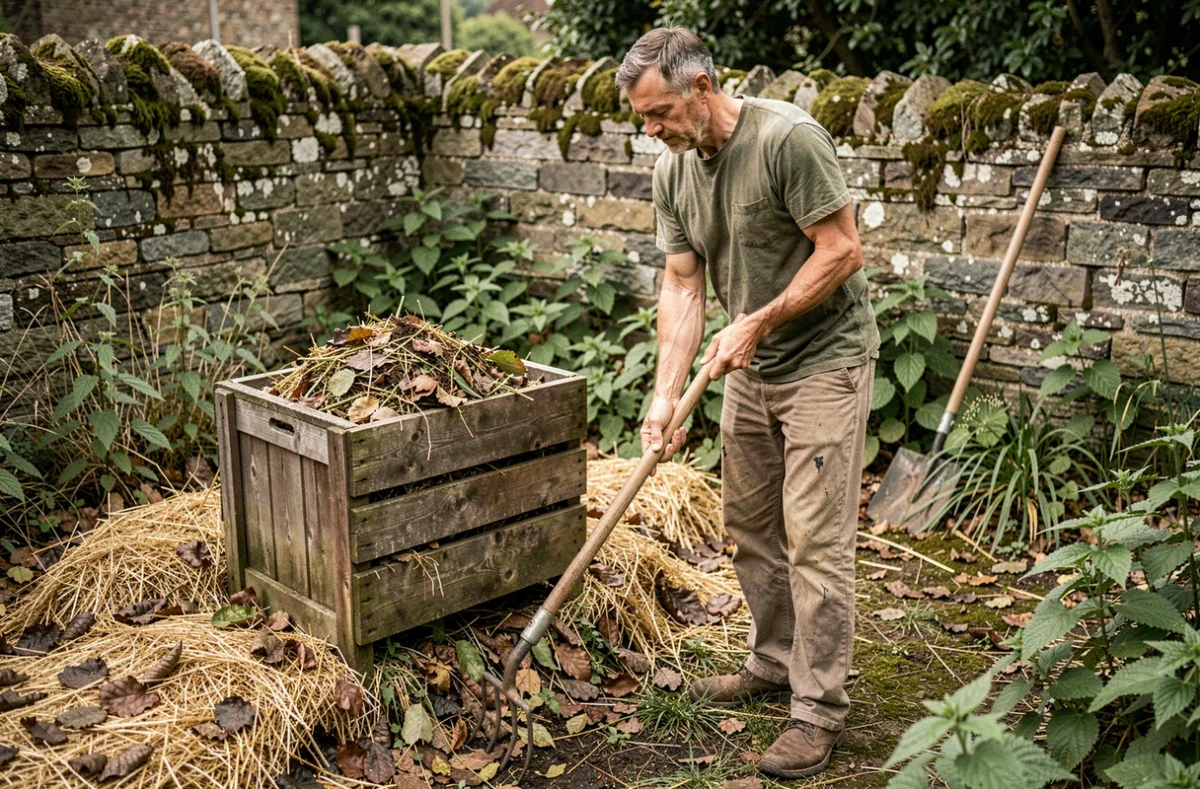
Compacted Soil or Living Soil: Adapting Soil Work to the Context
A common idea is to never till the soil to preserve soil life. This rule deserves nuance. For soil that is already structured and rich in humus, mulching, surface compost contributions, and light aeration are sufficient. Conversely, compacted or newly established soil may require occasional intervention to break hard layers and restart biological activity.
Systematic non-tilling works in a garden that has been maintained for several years with regular organic contributions. Applied to bare or trampled land, it risks maintaining an asphyxiating structure for the roots.
Recognizing Soil That Needs Intervention
- Water stagnates on the surface after moderate rain, indicating a compaction layer or compacted horizon
- The roots of vegetable crops remain superficial and deform instead of diving deep
- The soil forms hard clumps and does not crumble between the fingers, even when slightly moist
In these cases, using a broadfork (without complete tilling) or sowing green manure with taproots allows for decompaction without destroying soil fauna. The goal remains to make mechanical work unnecessary in the long term, allowing biology to take over.
Organic Waste in the Garden: What Changes with Sorting Regulations
Since the implementation of obligations related to organic waste sorting, each community must offer a solution to households: individual composting, shared composting, separate collection, or voluntary drop-off points. The Ministry of Ecological Transition specifies that domestic composting is not mandatory for every household.
For gardeners, this evolution opens up a concrete opportunity. Food waste and green waste, instead of ending up in conventional collection, can directly feed the fertility cycle of the vegetable garden.
What Organic Waste to Valorize in the Vegetable Garden
Vegetable peels, coffee grounds, crushed eggshells, dead leaves, and fine layers of grass clippings: these materials, mixed in balanced proportions of carbon and nitrogen, produce compost usable in a few months. Meat or fish residues, on the other hand, attract pests and slow down decomposition in a typical home composter.
Transforming organic waste into amendments avoids the purchase of fertilizers and reduces the volume of waste collected by the municipality. The garden becomes a link in the cycle, not just a space for consuming resources.
Drought and Runoff: Transforming the Garden into a Buffer Zone
Eco-responsible gardening now incorporates the management of drought episodes and runoff, not just fertility. Permanently covering the soil and local water infiltration limit losses to drainage systems.
In practical terms, this involves simple adjustments. Basins at the foot of fruit trees slow down runoff. Grass strips between crop beds filter and retain rainwater. A mulched soil absorbs significantly more water than bare soil because the organic matter on the surface prevents the formation of an impermeable crust.
Hedges and Buffer Zones for Biodiversity
Hedges and rows of trees play a complementary role. They slow down the wind (which reduces evapotranspiration of neighboring crops), shelter garden helpers, and create ecological corridors. A garden structured with diverse hedges is more resilient to climatic variations than an open and exposed space.
- Favor local species adapted to the climate and soil of the region, rather than water-intensive horticultural varieties
- Plant in staggered rows to increase windbreak effect on the first rows of vegetables
- Leave the base of the hedge untrimmed to provide refuge for pollinating insects and small mammals
A vegetable garden surrounded by low hedges and with permanently covered soil functions as a local cool reserve. The resources from Terre d’Humus address these adjustments with practical sheets related to seeds, varieties, and crops suitable for each season.
The distinction between a decorative garden and a truly resilient garden lies in these structural choices: protected soil, locally infiltrated water, functional biodiversity. Every technical gesture, from mulching to hedges, is part of a system where living soil remains the primary factor for success.