The automotive sector is going through a period where the usual benchmarks are wavering. Between a slowing Chinese market, European regulations changing buying behaviors, and unexpected niches gaining ground, the automotive trends of 2025-2026 are shaping a landscape quite different from that of five years ago. Here are the most striking threads of this news, far from sales rankings and conventional technical sheets.
Chinese automotive market: when saturation reshuffles the cards for exports
The CEO of Nio has made a diagnosis that has resonated throughout the industry: according to him, the Chinese automotive market has surpassed its “golden age”. Domestic sales are declining, and the direct consequence is measured in the price war that Chinese manufacturers are waging, both at home and internationally.
This downturn is pushing Chinese brands to multiply niche electric models to capture even the slightest pockets of demand. We are seeing ultra-compact city cars designed for Asian megacities, electric pickups tailored for South America, and even micro-brands that did not exist two years ago. This proliferation strategy resembles what the smartphone market experienced at the end of the 2010s: too many references, not enough real differentiation.
For European buyers, specialized publications shared on actu-auto-buzz.fr regularly document the arrival of these models at prices that disrupt the usual grids. The BYD Dolphin G DM-i, announced as a plug-in hybrid starting at €23,990, illustrates this pricing pressure from China on the city car segment, a niche where European manufacturers display significantly higher prices.
“Recalibration” effect: regulations driving buyers away from certain vehicles
In France, the fear of failing the technical inspection is causing demand to plummet for certain models, often older or high-emission vehicles. Professionals grouped within Mobilians have publicly alerted to the losses this disaffection is causing among sellers, estimated at several thousand euros per affected vehicle.
The mechanism is simple yet formidable. A potential buyer hesitates when faced with a vehicle knowing that the next technical inspection will be stricter, or that a low-emission zone may prohibit access. They turn to a newer or cleaner model, even if it costs more to purchase.
What this changes for the used car market
Older generation diesel vehicles and certain high-emission gasoline models find themselves in a commercial deadlock. Their residual value is collapsing faster than expected, creating a gap between the price displayed by the seller and what the buyer is willing to pay. The intensity of the phenomenon varies by region, but the underlying trend is documented.
For private sellers, the risk is ending up with a vehicle that is nearly unsellable. For professionals, it is a stock that depreciates a little more each month. Regulation is producing a market effect here that is more powerful than traditional financial incentives.
Classic cars and automotive tourism: an expanding economic niche
The automobile is not limited to daily mobility. Tourism related to classic cars generates an economic impact that regions are beginning to take seriously. Historic rallies, gatherings of enthusiasts, circuits open to vintage vehicles: these events attract an audience that spends on-site (accommodation, dining, specialized mechanics).
- Regularity rallies for vintage vehicles are multiplying in tourist regions, with direct benefits for local hospitality and catering.
- Automotive restoration workshops are developing around these events, creating specialized jobs in rural areas.
- Some local authorities are now integrating automotive heritage into their tourism promotion strategy, alongside gastronomy and built heritage.
This segment remains difficult to quantify precisely, but its local economic weight often exceeds that of better-subsidized cultural events. The available data does not allow for a national figure, however, feedback from local organizers converges towards a steady growth in attendance.
Unusual models and concept cars: what manufacturers’ choices reveal
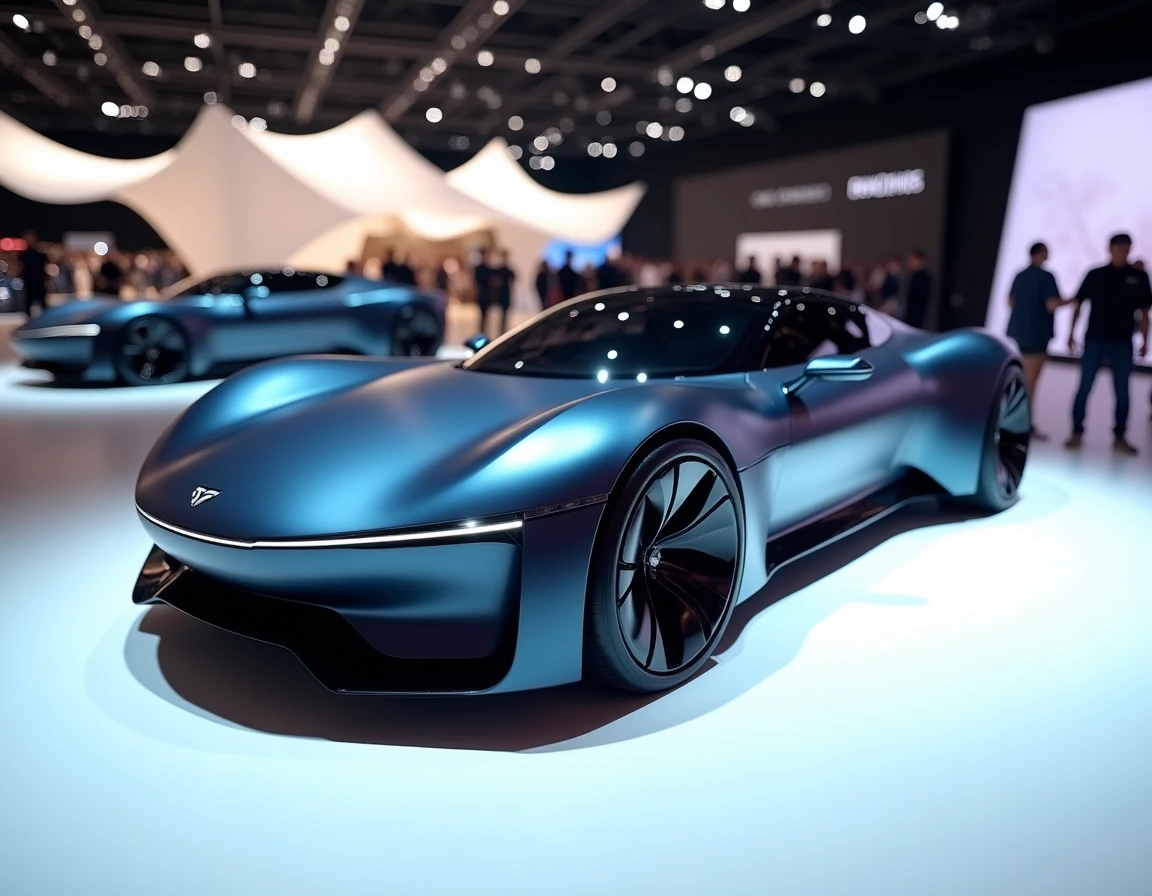
Each year brings its share of vehicles that surprise with their boldness or incongruity. The Peugeot e-208 GTI illustrates a shift that few expected: an electric city car showcasing a sporty identity, in a segment where performance was historically reserved for combustion engines. At Audi, the Nuvolari concept (hybrid supercar announced at 1,000 horsepower) pushes the logic of electrification into a territory usually reserved for noble atmospheric engines.
These choices are not anecdotal. They reflect a profound mutation in what manufacturers consider desirable. Motorsport and prestige are migrating to electric without waiting for the disappearance of combustion engines. Alpine, Ferrari, Aston Martin: all are developing hybrid or electric models aimed at sportiness, a sign that the shift is underway even in the most conservative segments.
The case of micro-segments and atypical vehicles
Beyond the major brands, the current period is seeing the emergence of vehicles that are difficult to classify. Bugatti-branded scooters, urban electric quadricycles, compact pickups designed for Europe: these niche segments blur the line between automobile and light mobility. Manufacturers are testing formats that the market has not yet validated, with uncertain results.
Regulatory pressures, Chinese competition, and the rise of unlikely niches are reshaping a sector where yesterday’s certainties are no longer sufficient to anticipate tomorrow’s choices. Some of these trends will structure the market for several years, while others will not go beyond the prototype stage or salon buzz.