Making whisky at home is attracting more and more curious individuals, ranging from spirit enthusiasts to fermentation fans. The process relies on three simple ingredients (grains, water, yeast), but the legal and technical reality in France makes the endeavor much more regulated than a typical cooking tutorial would suggest.
Legal framework for distillation in France: what customs impose
Before discussing grain or fermentation, one point blocks most home whisky projects: home distillation is not freely authorized in France. The old provisions related to distillers do not constitute a general right to distill whisky at home. Any production must be verified with customs and the relevant authorities.
In practical terms, owning a still without declaration exposes one to penalties. Producing distilled alcohol without authorization falls under the same framework. Online content detailing the production without mentioning this regulatory lock omits a crucial element.
For those who still wish to explore the subject, particularly the preparation of the mash and fermentation (which are legal steps), a homemade recipe on Capitaine Comment? outlines the entire theoretical process.
European regulation on the whisky designation: criteria to know
Calling a homemade distillate “whisky” is not just a matter of vocabulary choice. The regulation (EU) 2019/787 sets strict criteria for a beverage to bear this designation in the European Union.
- The distillation must be carried out at less than 94.8% vol., which excludes overly rectified distillates that would lose the character of the original grains.
- Aging must last at least three years in wooden containers with a maximum capacity of 700 liters.
- The final alcoholic strength must reach at least 40% vol. at the time of bottling.
A young homemade distillate, even if made from malted barley and properly fermented, cannot be marketed under the name whisky in the EU if it does not meet these conditions. For strictly personal use (and within an authorized framework), the question of designation is anecdotal. However, any idea of selling or gifting labeled “whisky” without adhering to these criteria poses a legal problem.
Making the grain mash: grain, water, and fermentation
The accessible part of the process, which does not require a still, resembles beer production. Whisky is, at its core, an unhopped beer that is then distilled.
Choosing the grain and malting
Barley remains the most commonly used grain in whisky production worldwide, apart from American bourbon which primarily relies on corn. Barley has several advantages: it grows easily, is simpler to brew, and offers a better yield of fermentable sugars.
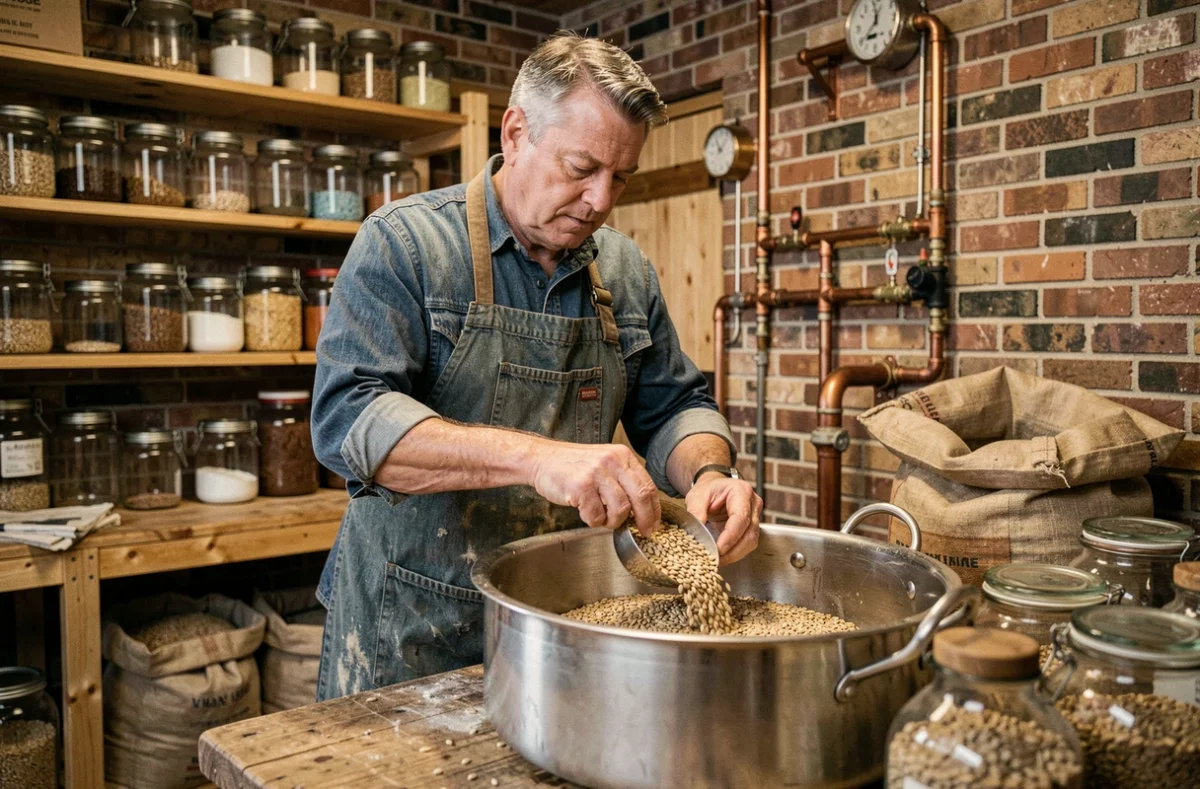
Malting involves soaking the grains in water for about 48 hours, alternating between immersion and aeration, to trigger germination. The grains then produce enzymes (amylase) that make starch accessible for conversion into sugars. The grains are then dried, sometimes smoked depending on the desired flavor profile.
Mashing and sugar conversion
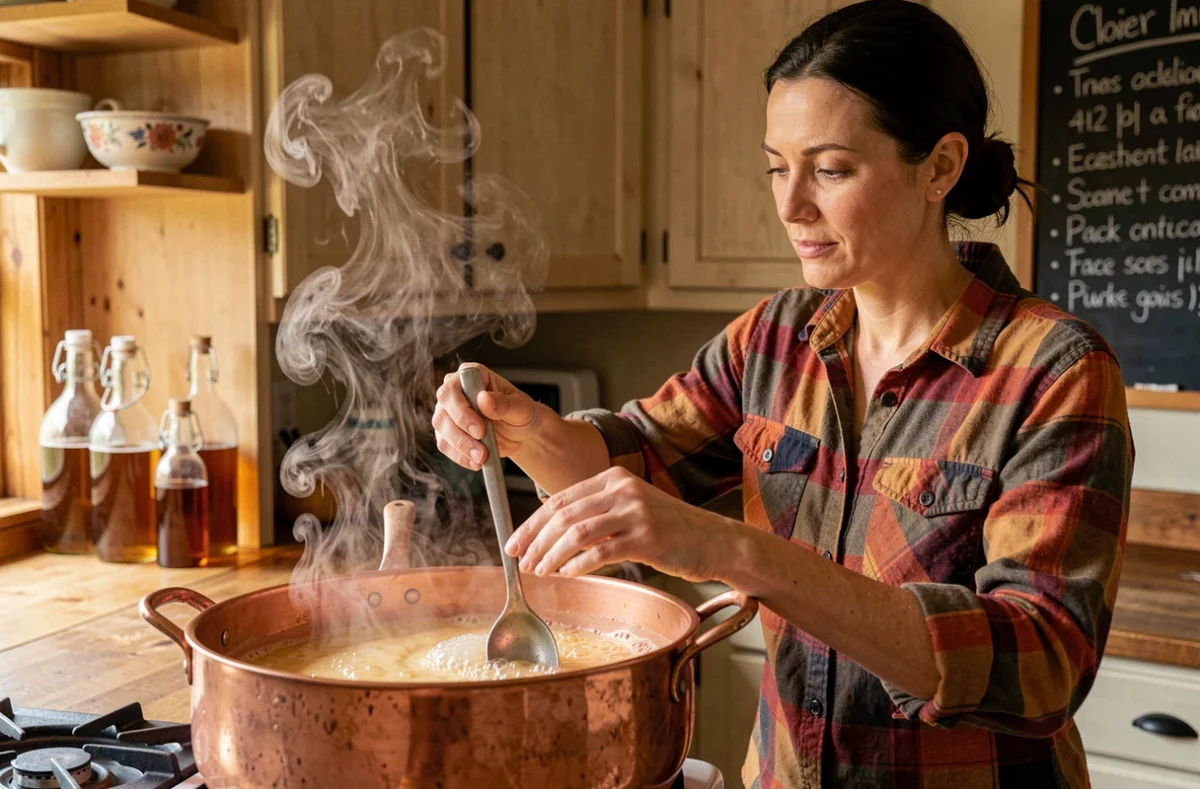
The dried malt is crushed and then mixed with hot water. This step, mashing, activates the enzymes that transform starch into simple sugars. The resulting sweet liquid, called wort, forms the basis of fermentation.
The quality of the water plays a direct role in the profile of the final product. Many Scottish and Irish distilleries make this a central argument of their identity.
Fermentation of the wort
The wort is transferred into a fermentation vessel (demijohn, food-grade bucket) with yeast. Distilling yeast yields better results than baking yeast, but the latter works for a first experience. Fermentation generally lasts several days and produces a low-alcohol liquid, comparable to beer.
Distillation and aging of whisky: the critical steps
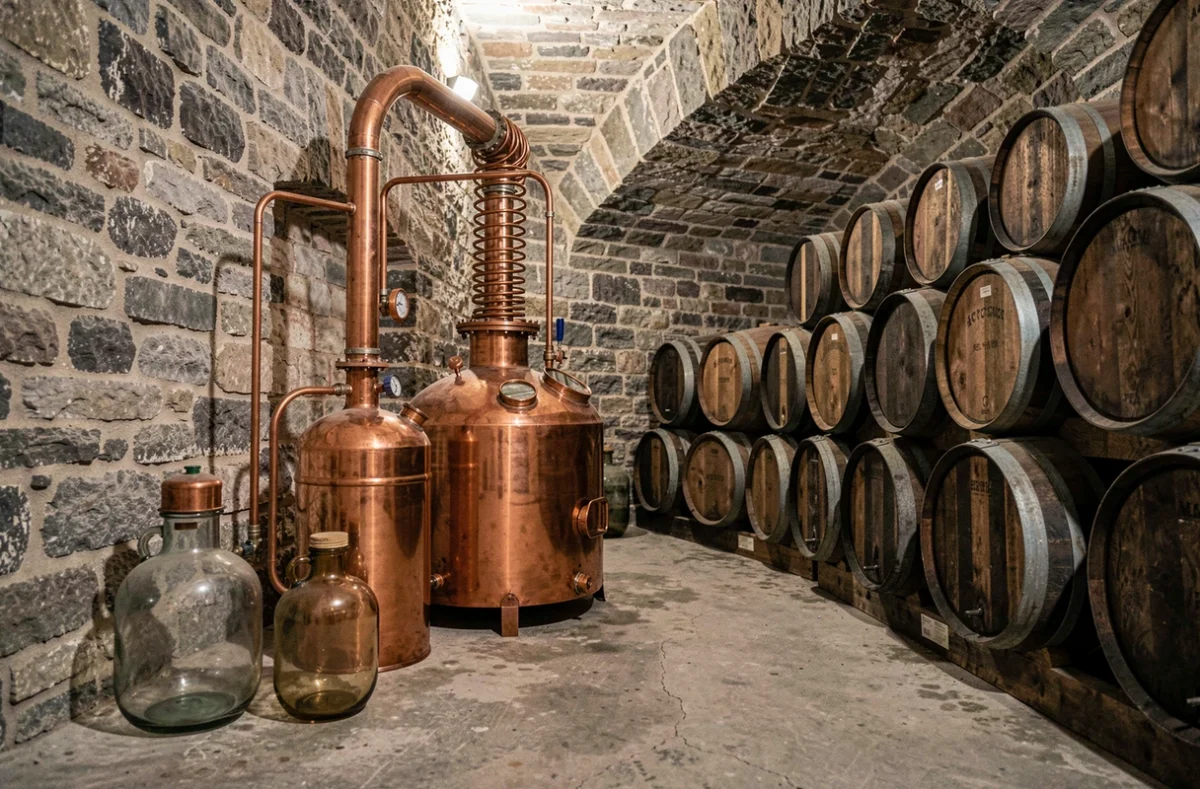
Distillation is the step that separates whisky from beer. It concentrates the alcohol and selects the aromas by eliminating undesirable fractions (heads and tails of distillation). The heads contain methanol and other harmful compounds, while the tails bring heavy flavors.
The correct separation of fractions is the most critical safety point of any artisanal distillation. A poor cut exposes one to real health risks, which online tutorials often downplay.
Aging in barrel: patience as an ingredient
The colorless distillate that comes out of the still does not yet have the profile of a whisky. Aging in oak barrels imparts color, aromas of vanilla, caramel, or dried fruits, and softens the raw character of the spirit. New barrels, old bourbon or sherry casks yield very different results.
For home use, oak chips in contact with the distillate in a glass container are sometimes used as an alternative to barrels. Field reports vary on this point: some enthusiasts find the result satisfactory, while others believe it does not replace a true barrel aging, even in small containers.
Whisky workshops and legal alternatives for enthusiasts
Several French distilleries offer supervised spirit-making workshops, where participants carry out all or part of the process under supervision. These programs allow for a concrete understanding of each step, from grain to glass, without facing the regulatory constraints of private distillation.
Blending is another avenue: some kits allow mixing already distilled and aged whiskies to create one’s own blend, an approach that requires neither a still nor authorization and makes for an original gift for a whisky lover.
Homemade whisky remains a long-term project, both for technical and legal reasons. Fermentation and mashing are accessible to anyone equipped with a minimum of brewing equipment. Distillation, however, requires an authorized framework and a rigor in fraction separation that cannot be improvised.