
A dripping faucet, a poorly ventilated room, insufficient lighting in the hallway: most domestic inconveniences stem from poorly chosen or aging equipment. Improving your home doesn’t necessarily require major renovation work. Often, replacing or adding a few targeted pieces of equipment can significantly enhance the comfort of a living space.
Home Ventilation: The Invisible Equipment That Changes Air Quality
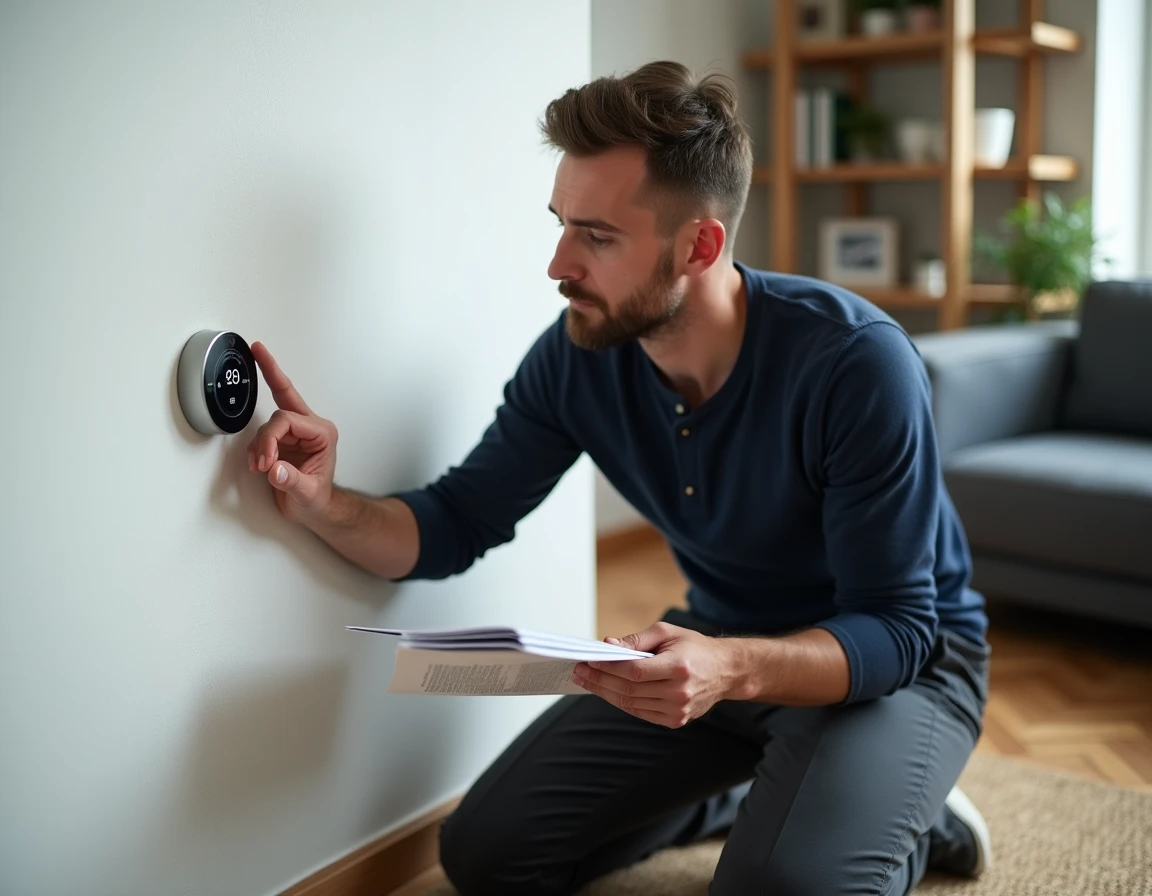
Have you ever noticed persistent condensation on your windows in the morning, or a musty smell in the bathroom despite regular ventilation? The problem rarely lies with your habits. It comes from ventilation.
A mechanical ventilation system (VMC) continuously renews indoor air. It expels moisture produced by the shower, kitchen, and laundry drying. Without it, excess moisture damages walls and promotes mold growth.
There are two main types. A single-flow VMC extracts stale air through vents in humid rooms. A double-flow VMC recovers heat from outgoing air to preheat incoming air, reducing heating consumption.
For a standard-sized apartment or house, a hygroscopic single-flow VMC (which adjusts its flow rate based on humidity levels) is the best compromise between cost and efficiency. The double-flow system is justified in very well-insulated homes, where every heat loss counts.
Before any installation, check the condition of the air inlets on your windows. Many homeowners block these vents without realizing they feed the ventilation circuit. An efficient VMC paired with blocked air inlets is useless.
To compare available equipment on Habitat Guides, simply filter by type of ventilation and living space to find the model suited to your configuration.
Connected Detectors: Securing Every Room in the House

Home security has long been synonymous with reinforced locks and basic smoke detectors. Connected sensors change the game, especially for individuals living alone or seniors aging in place.
Smoke and carbon monoxide detectors linked to a smartphone allow you to alert a loved one or caregiver in case of an incident, even from a distance. The alert goes directly to the phone, shortening the response time.
Other devices complement this foundation:
- Motion sensors detect prolonged inactivity in a room and send a notification, useful for spotting a fall or distress in an elderly person.
- Connected pill dispensers signal missed medication doses, a major issue for maintaining autonomy at home.
- Flood detectors, placed under the sink or near the washing machine, cut off the alert before damage spreads.
The value of these devices lies in their interconnectivity. A single dashboard on the phone consolidates all alerts. The security gain comes from the speed of information, not from the multiplication of sensors.
Before purchasing, check the compatibility between the sensors and your internet box or voice assistant. Some communication protocols (Zigbee, Z-Wave) require a dedicated hub, which adds a cost often overlooked.
Bathroom Design: Prioritizing Accessibility
The bathroom accounts for the majority of domestic accidents. A wet floor, a bathtub that’s hard to step over, a space too narrow to turn around: these situations concern everyone, not just seniors.
Replacing a bathtub with a walk-in shower with a low-profile tray removes the main physical barrier. Step-free access makes it easier for a child, a person with reduced mobility, or simply after a temporary injury.
A few targeted additions enhance the design:
- Grab bars fixed into the wall studs (not just drywall) next to the shower and toilet.
- A thermostatic mixer that limits the maximum water temperature to prevent burns.
- A non-slip floor covering rated at least PN12 (barefoot, 12-degree slope) according to current standards.
Adapting your bathroom is cheaper before an accident than after. For condominiums, the multi-year work plan (PPT), mandatory since January 1, 2025, for condominiums with fewer than 50 lots, can include accessibility work in the common areas serving these rooms.
Hot Water Production and Heating: Balancing Comfort and Consumption
Why does this choice deserve so much attention? Because heating and hot water represent the dominant share of a home’s energy bill.
A thermodynamic hot water tank captures calories from the ambient air to heat water. It consumes significantly less than a conventional electric water heater while providing the same volume of hot water.
For heating, the question varies depending on the insulation of the home. In a poorly insulated house, investing in a high-performance boiler without addressing thermal losses is like heating the outdoors. Insulating the attic and walls is a prerequisite for any heating system change.
Some Guidelines for Choosing
In a well-insulated home, an air-to-water heat pump is a favorable replacement for a gas or oil boiler. It produces heating and hot water with a single device.
In a condominium apartment connected to collective heating, individual maneuverability is more limited. The previously mentioned PPT may plan for the replacement of the collective boiler, improving efficiency for all residents.
A simple and free gesture complements these investments: lowering the heating temperature by one degree measurably reduces consumption. Combined with a programmable thermostat, this adjustment sets the temperature room by room and hour by hour.
Each home has its own constraints (size, exposure, year of construction, type of condominium). The choice of equipment always depends on this initial diagnosis. A high-performance device installed in an unsuitable context will not yield the expected results. Starting with the room that poses the most daily problems, whether it’s ventilation, the bathroom, or heating, remains the most effective method to improve your home without spreading your budget too thin.